


The 9 Principles Of Soa Design
posted by Anna Mar, June 30, 2016Service-oriented Architecture (SOA) is as simple as can be. There are 9 design principles to keep in mind when designing a SOA service:
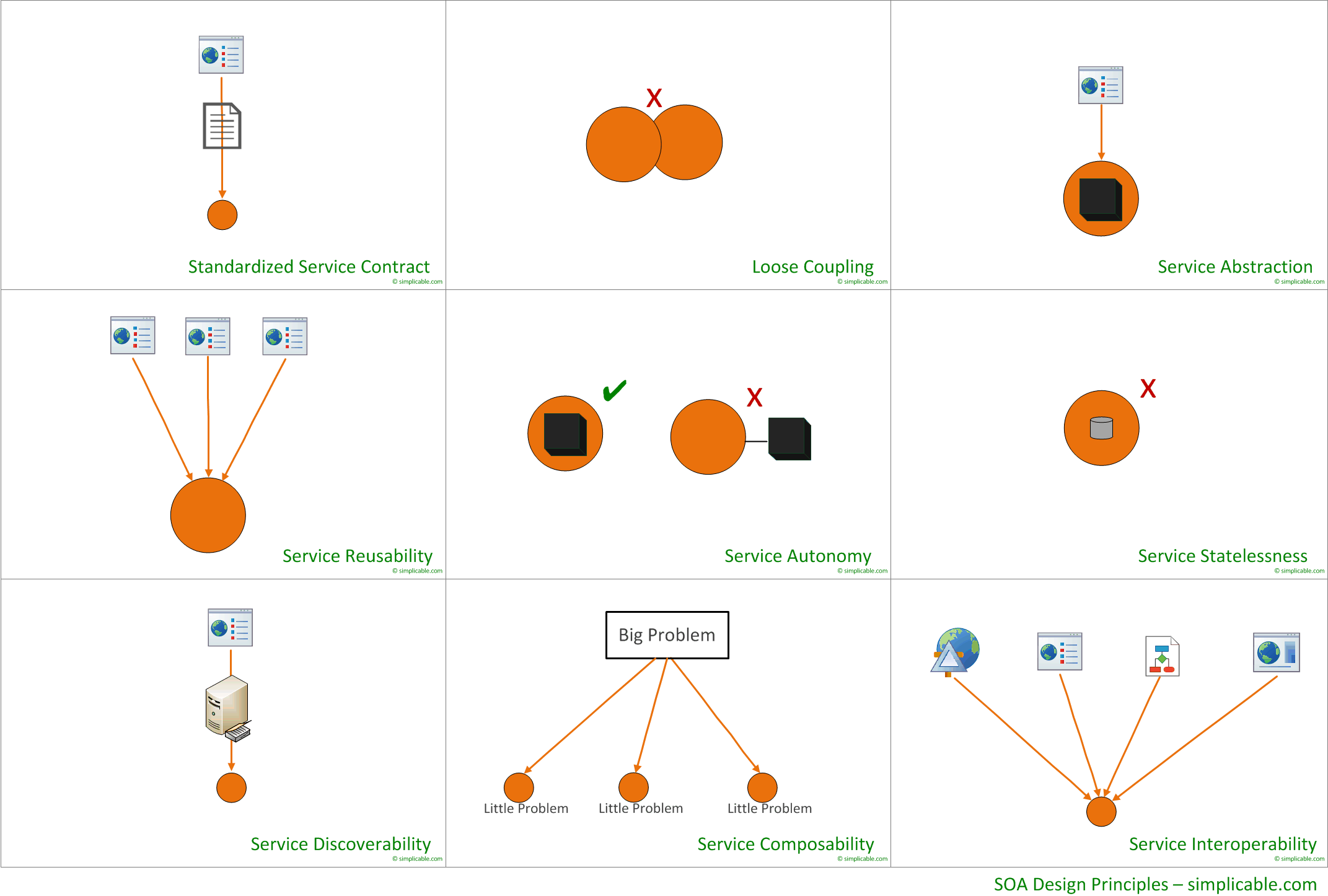
1. Standardized Service Contract
Services adhere to a service-description.

2. Loose Coupling
Services minimize dependencies on each other.

3. Service Abstraction
Services hide the logic they encapsulate from the outside world.

4. Service Reusability
Logic is divided into services with the intent of maximizing reuse.

5. Service Autonomy
Services should have control over the logic they encapsulate.

6. Service Statelessness
Ideally, services should be stateless.

7. Service Discoverability
Services can be discovered (usually in a service registry).

8. Service Composability
Services break big problems into little problems.

9. Service Interoperability
Services should use standards that allow diverse subscribers to use the service. This is considered so obvious these days that it is often dropped as a principle.

These 9 principles are summarized in this handy reference chart:

|
The following template captures your high level enterprise architecture. |

|
How to architect an organization. |

|
IT career management |

|
Ever wonder when that hot new technology is going to get cheaper? Learn what really drives technology prices. |
Recently on Simplicable

| 5 Common Current State Architectural Blueprint Mistakesposted by Anna MarA current state architectural blueprint is essential to your success as an IT organization. After all, you can't effectively manage a complex architecture that's not documented. |

| 9 Reasons You Need a Current State Architectural Blueprintposted by Anna MarA current state enterprise architecture blueprint represents your organization's high level architecture. It's probably the most important documentation that any IT organization can create and maintain. |

| 10 Big Data Definitions: Take Your Pickposted by John SpaceyAs with any emerging field, the definition of big data is always in flex. |

| 9 ITIL Implementation Challengesposted by Anna MarITIL implementation is no cakewalk. ITIL impacts your entire organization — your business, your IT department and your inflight projects. |
