The melting point of a substance is the point at which it changes state from a solid to a liquid. This can be contrasted with a freezing point where a substance changes from a liquid to a solid. For most substances, the freezing point is the same as the melting point because the number is given as the equilibrium point between the two states. For example, in theory water won't freeze at 0°C nor will ice melt. The following are estimated melting points for selected elements and substances.
Element / Substance
Celsius
Fahrenheit
Helium
-273
-459
Hydrogen (H2)
-259
-434
Oxygen (O2)
-219
-362
Nitrogen (N2)
-210
-346
Mercury
-39
-38
Water / Ice
0
32
Sea Ice
-2
29
Chocolate
30 - 35
85 - 95
Butter
32
90
Cheese
50 - 80
120 - 180
Sodium
98
208
Plastic (Polyethylene)
141
286
Plastic (Polypropylene)
179
354
Tin
232
449
Nylon (66)
264
507
Cadmium
321
610
Lead
327
621
Zinc
420
787
Rocks (Igneous)
600 - 1500
1112 - 2732
Magnesium
650
1202
Aluminium
660
1220
Calcium
842
1548
Silver
962
1763
Ceramics
1000 - 3000
1832 - 5432
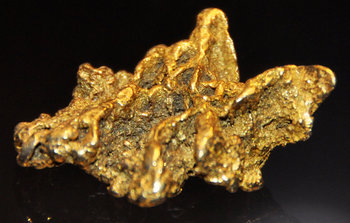
Gold
1064
1948
Copper
1085
1984
Concrete
1200
2192
Manganese
1246
2275
Glass (Soda-lime)
1400
2552
Silicon
1414
2577
Carbon Steel
1425 - 1540
2600 - 2800
Nickel
1455
2651
Iron
1538
2800
Palladium
1555
2831
Glass (Fused Quartz)
1650
3002
Titanium
1668
3034
Platinum
1768
3215
Chromium
1907
3465
Molybdenum
2623
4753
Titanium Carbide
3160
5720
Tungsten
3422
6192
Graphite
3527
6381
Diamond
3527
6381
Notes
For illustrative purposes only. Many factors, such as atmospheric pressure, go in to calculating a melting point estimate such that the chart above is can be viewed as approximate.In theory, the freezing point of most substances is the same as its melting point. However, due to a process known as supercooling the freezing point of many substances is somewhat unpredictable. For example, water usually freezes just below 0°C but will only do so if there are minerals in the water that facilitate the crystallization process by serving as a nucleus. Without this, water can go as low as −48 °C (−55 °F) without freezing.
It is a common myth that concrete doesn't melt. This is likely due to the fact that nobody tries to melt concrete but rather there is a great deal of data about how concrete is damaged in a fire. This all occurs at much lower temperatures than the melting point. It would also be very rare for a fire to actually melt concrete. This doesn't mean it can't be melted in a lab. Because concrete is made of multiple substances these all melt at different temperatures but all will completely melt at the temperature above (see reference below). The actual melting point of concrete will depend on its exact composition.Some things require a special process to melt. For example, wood is made of mostly carbon and water such that it can certainly melt but this could only occur without oxygen as it would burn before it would melt. Due to its carbon content the melting point of wood is likely similar to the melting point of a diamond above.
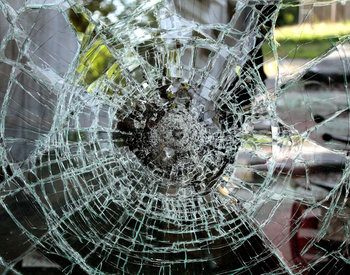
All elements melt but not all substances will return to their original physical form after a cycle of melting and freezing. Therefore, a melting point isn't usually calculated for these substances. This doesn't mean they can't be melted.It is often argued that a substance doesn't have a melting point because it goes through physical or chemical changes before melting. This seems like a weak argument. For example, glass will crack due to thermal expansion before melting but it will still ultimately melt.
In some cases, parts of a substance will turn into a gas before the rest of the substance melts. This may be a turbulent process. For example, the water in concrete can become a gas while the concrete is still a solid. This may cause the concrete to break apart.All elements melt and all things are made up of elements. Therefore, it seems likely that all things can melt. This may have some odd exceptions based on special conditions. For example, you can't melt a single atom.
86 Shares
Citation
John Spacey. "43 Examples of a Melting Point." Simplicable. Retrieved November 17, 2026. from https://simplicable.com/materials/melting-point
References
Hager, Izabela. . Behaviour of cement concrete at high temperature. Bulletin of the Polish Academy of Sciences, 2013.
Cookies help us deliver our services. You have choices regarding these cookies. Please visit our privacy policy, cookie policy and consent tool to learn more.
Copyright 2002-2026 Simplicable. All rights reserved. This material may not be published, broadcast, rewritten, redistributed or translated. Report violations here.