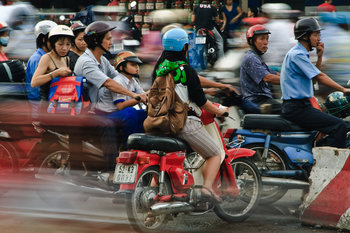
Common resources are resources that everyone can access. These are non-excludable meaning that it is difficult to stop people from using common resources. They are also potentially, but not always, depletable such that the resource can be used up. Common resources can suffer from the tragedy of the commons whereby everyone has incentive to use a resource but nobody has individual incentive to manage and sustain it. The following are examples of common resources.
Air
Aquifers
Beaches
Common land
Common pastures
Coral reefs
Ecosystems
Fish
Forests
Grasslands
Lakes
Minerals
Oceans
Parks
Public space
Rivers
Roads
Rocks
Soil
Space
Sunlight
Timber
Trees
Water
Wildlife
Wind
Governments play a role in protecting common resources from destruction. People have little individual incentive to protect these resources but protection greatly benefits all.Common resources differ from public goods because the latter is defined as nondepletable whereby it can't be used up or destroyed with use. In practice, this is often just a pragmatic assumption whereby its assumed the resource will be used at some sustainable pace. For example, it is common to cite things such as education as public goods but educational services such as schools do have a capacity.
Cookies help us deliver our services. You have choices regarding these cookies. Please visit our privacy policy, cookie policy and consent tool to learn more.
Copyright 2002-2026 Simplicable. All rights reserved. This material may not be published, broadcast, rewritten, redistributed or translated. Report violations here.