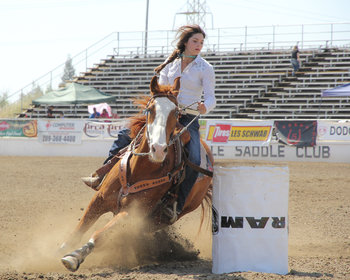
Grit is mental toughness and determination. This originates with American cowboy culture and was first documented in 1808 as meaning "steadfast character, pluck or resolve." This is often explained as an analogy to grit as coarse sand whereby someone with grit isn't afraid to get a little dusty. It could also be an analogy to gritting your teeth with determination but its true original inspiration is unknown. Grit reflects the ethos of the American frontier where grounded self-reliance and calm under pressure were required just to survive. There is much modern interest in grit as a character strength because it feels like something that may be missing in modern life. The following are the key things to know about grit:
Grit is a quiet acceptance of problems.
Grit doesn't make noise. It just shows up. If you have grit, you face problems, challenges, failures, disappointment and general adversity without complaint. Complaining about things reveals a lack of acceptance that life is hard. Grit just deals with it.
Grit is a type of humility.
Humility is the recognition of what is beyond your control so that you can focus on what you can do and what you can change. This is actually a good description of grit whereby if you have grit you don't waste time complaining about things beyond your control but simply act in a pragmatic way to deal with each situation.
Grit is self-control.
Self-control is the ability to do what you need to do even if you're not feeling particularly motivated. This is a property of grit as it's not the type of thing that relies on motivation. For example, waking up early to do many hours of farm work without a need to reward yourself or motivate yourself.
Grit is determination.
Grit is a type of determination whereby people can live according to their principles. For example, it is associated with a strong work-ethic and steadfast commitment to a way of life.
Grit is principled.
Grit is not mere stubborn persistence or blind endurance but is fueled by guiding principles such as morality, loyalty, responsibility, faith or a commitment to rugged individualism.
Grit is self-reliant.
Grit is an age-old mindset rooted in self-reliance, a way of thinking where people didn’t look for help at every hurdle but instead cultivated their own strengths to face challenges on their own.
Grit is mental toughness.
Grit is the ability not to lose it when stressed but to face difficulty with calm resolve. For example, the capacity to keep your cool and walk away when somebody tries to pick a fight with you. It takes more grit to hold back than to let emotions or ego fuel your actions.
Grit is a heroic trait.
Grit is a common trait of heroes of fiction and film. Heroes are often an underdog faced with incredible challenges who nonetheless press forward with calm resolve. They may ultimately succeed or fail but either way they show their true grit and this is an admirable trait that modern audiences intensely respect, possibly because it's missing or rare in modern life.
Grit is a factor in success.
It's not always the smartest or most privileged person who is successful. The components of grit such as pragmatism, mental toughness, determination and self-control can all be used to explain success in life over time.
Summary
Grit is a particular flavor of mental toughness and determination that is quiet, self-reliant and self-controlled. People tend to respect these traits in a modern world where people are often vocal and expressive, reliant on others with a need for regular motivation and reward. Grit does have its weaknesses. For example, sometimes it is good to ask for help or to express yourself. However, it undeniable that people respect grit and that it can be effective in the real world whereby it can help to explain why some people thrive in tough and competitive pursuits such as business, sport or life in general.
3 Shares
Grit
This is the complete list of articles we have written about grit.
Cookies help us deliver our services. You have choices regarding these cookies. Please visit our privacy policy, cookie policy and consent tool to learn more.
Copyright 2002-2026 Simplicable. All rights reserved. This material may not be published, broadcast, rewritten, redistributed or translated. Report violations here.