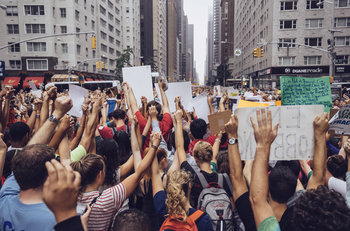
Equality is the principle that all individuals possess the same intrinsic value and are to be granted the same fundamental rights, freedoms and opportunities regardless of their identity, background or status. This ensures that no person is given unjust advantage or subjected to unfair treatment based on arbitrary distinctions such as race, gender, class or belief. The following are the key things to know about equality:
Equal Worth Of All Individuals
The principle that every human being has the same inherent dignity and moral value. This is a core principle in democratic societies. For example, the Declaration of Independence states -- "We hold these truths to be self-evident, that all men are created equal, that they are endowed by their Creator with certain unalienable Rights, that among these are Life, Liberty and the pursuit of Happiness."
Equal Protection Under The Law
Everyone is entitled to the same legal rights and safeguards. Laws must apply equally to all people and protect them from discrimination or harm. No one receives special immunity or unfair punishment based on who they are. The justice system must operate without bias.
Equal Access To Opportunities
Under equality, everyone should have a fair chance to pursue success and well-being. People must be able to access education, jobs and services without facing systemic barriers. This ensures merit and effort determine outcomes rather than discrimination or privilege.
Equality is Not Sameness
Equality is not treating everyone identically but rather fairly. Opportunities can be based on merit under equality. For example, a streaming music service that promotes popular musicians that people tend to like as opposed to promoting all musicians equally including those that audiences appear to dislike.
Equal Access to Public Services
Every individual regardless of their identity, background or social status is provided equal access to essential government services. These services can include healthcare, education, transportation, sanitation, social security, emergency response and public space.
Equal Access To Justice
Every individual regardless of regardless of identity or background has the ability to seek and obtain a fair resolution through the legal system. This includes access to courts, legal representation, fair trials and enforcement of rights. For example, the right to a court appointed lawyer if you can't afford a one.
Equal Political Participation
All citizens of a nation have the right to influence public decision-making with an equal voice. Everyone has the right to vote, run for office, assemble and engage in free speech regardless of their status or background. In principle, democratic systems are also supposed to prevent undue interference in the political process by elites such as monopolies, corporations or wealthy individuals.
Protection From Discrimination
Systems and institutions must actively prevent discrimination such as racism. Discrimination erodes dignity and restricts opportunity. Equality demands proactive inclusion and justice.
Summary
Equality is a fundamental principle and a cornerstone of democracy that applies to rights, freedoms, access to government services and participation in public and economic life. This recognizes the equal worth of all people and ensures equal opportunity and access for everyone.
2 Shares
Equality
This is the complete list of articles we have written about equality.
Cookies help us deliver our services. You have choices regarding these cookies. Please visit our privacy policy, cookie policy and consent tool to learn more.
Copyright 2002-2026 Simplicable. All rights reserved. This material may not be published, broadcast, rewritten, redistributed or translated. Report violations here.