Globalization is the process of increasing interconnection, interdependence and integration among countries, cultures, economies, institutions and populations across the world. This is a long running process that has been ongoing since the beginning of history but has massively accelerated in the modern age due to innovations such as jet travel, internet communications and social media. The following are the key points to know about globalization:
Globalization Increases International Flows
Globalization involves the broadening and deepening of flows of goods, services, capital, information, people and ideas across national and regional boundaries. For example, an investor in Germany purchases American stocks.
Globalization is Driven By Change
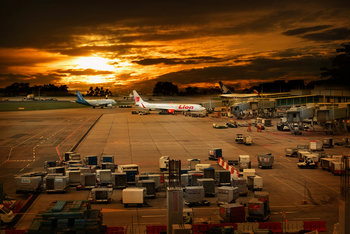
Globalization is accelerated by advances in technology, communication, transportation and international cooperation and occurs across economic, political, cultural, environmental and social dimensions. For example, air travel massively reduced the cost, risk and time required to travel across the globe.
Globalization Integrates National Economies
Generally speaking, economies become more interconnected through trade agreements, capital movement and shared markets over time. For example, a bank that operates in dozens of countries.
Globalization Accelerates Information Exchange
Knowledge and media are shared rapidly across the globe. For example, an Australian researcher publishes a paper and it's cited by researchers in 20 countries within a month.
Globalization Expands Cultural Interaction
In the modern world, people from different cultures commonly come into contact through travel, media and online interactions such as social media, forums or video games.
Globalization Increases Labor Mobility
People move across borders for work, education, safety or improved quality of life in larger numbers. This migration contributes to demographic change. International workforces can become a key competitive advantage for nations able to attract talent.
Globalization Spreads Capital Internationally
Financial resources are invested across borders in search of profit or stability. This includes foreign direct investment, stock purchases and loans. For example, a Japanese fashion brand expands into the Mexican market.
Globalization Creates Competition at the Global Level
Businesses and individuals begin to compete at the international level. This typically benefits consumers with more choice and lower prices or greater quality. For example, Japanese car companies that improve quality to compete with German luxury cars.
Globalization Influences National Policies
International agreements and global institutions affect domestic governance. Governments are put under pressure to align to global norms and international agreements.
Globalization Alters Local Markets
Domestic economies are shaped by global supply and demand. Local producers face both opportunities and competition from abroad. For example, small farmers adjust to global price changes for agricultural exports.
Globalization Affects Cultural Identity
Exposure to global influences can reshape or challenge local cultural practices. This may lead to hybrid identities or cultural resistance.
Globalization Creates Economic Interdependence
Countries become reliant on others for goods, services and markets. This can enhance efficiency but creates vulnerabilities.
Globalization Spreads Innovation
Ideas developed in one part of the world are shared, adapted and improved globally, often at incredible speed. For example, a viral recipe produced by a Texas vlogger ends up as a menu item in restaurant in Norway a week later.
Globalization Increases Global Consciousness
People become more aware of international events, norms and identities. Interactions between people and shared challenges foster a sense of global citizenship.
Globalization Increases Economic Efficiency
Globalization allows countries and companies to specialize in what they do best at greater scale. This reduces costs, improves productivity and speeds up production. By connecting global supply and demand, prices tend to fall and quality tends to go up.
Globalization Drives Systemic Disruption
Globalization disrupts traditional industries, labor markets and social structures. This challenges established norms by introducing competition, automation and foreign alternatives. While disruptive, this drives intensive adaptation and innovation.
Summary
Globalization is a complex and contentious process that connects countries through trade, technology, information and cultural exchange. While it offers significant benefits such as access to innovation, investment and global markets it can also bring disruption to local economies, industries and cultural identities. Globalization is primarily driven by changes to technology and society — this change only tends to accelerate with time.
4 Shares
Globalization
This is the complete list of articles we have written about globalization.
John Spacey. "What is Globalization? (16 Key Points)." Simplicable. Retrieved November 18, 2026. from https://simplicable.com/society/what-is-globalization
Cookies help us deliver our services. You have choices regarding these cookies. Please visit our privacy policy, cookie policy and consent tool to learn more.
Copyright 2002-2026 Simplicable. All rights reserved. This material may not be published, broadcast, rewritten, redistributed or translated. Report violations here.