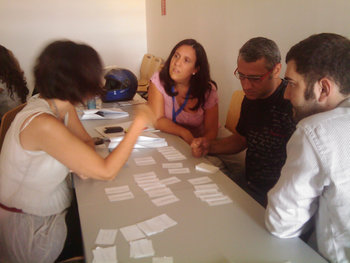
Synthesis of information is the process of developing insights, analysis, narrative, arguments and evaluations from multiple sources of information. This is a basic element of critical thinking that is used in research, essays, presentations, discussion and debate. The following are illustrative examples of the synthesis of information.
Integrating Knowledge
Taking information from multiple sources and combining them.
Narrative Synthesis
Weaving together information to construct a coherent story or reconstruction of events.
Argument Synthesis
Developing a thesis, hypothesis or argument by using a variety of sources.
Critical Synthesis
Evaluate the strengths, weaknesses and biases of information and how well sources support a hypothesis, theory or argument.
Thematic Analysis
Identifying overarching themes or patterns in information.
Meta-analysis
Integrating and evaluating the results of multiple studies.
Interdisciplinary Synthesis
Integrating knowledge from different disciplines. This can be valuable as real world issues aren't typically confined to a single area.
Summary
Synthesis of information is the process of developing new knowledge from existing sources. For example, using medieval tax records to show that a nation experienced a declining population and increased wages due to the Bubonic Plague.
John Spacey. "7 Examples of Synthesis Of Information." Simplicable. Retrieved November 17, 2026. from https://simplicable.com/edu/synthesis-of-information
Cookies help us deliver our services. You have choices regarding these cookies. Please visit our privacy policy, cookie policy and consent tool to learn more.
Copyright 2002-2026 Simplicable. All rights reserved. This material may not be published, broadcast, rewritten, redistributed or translated. Report violations here.