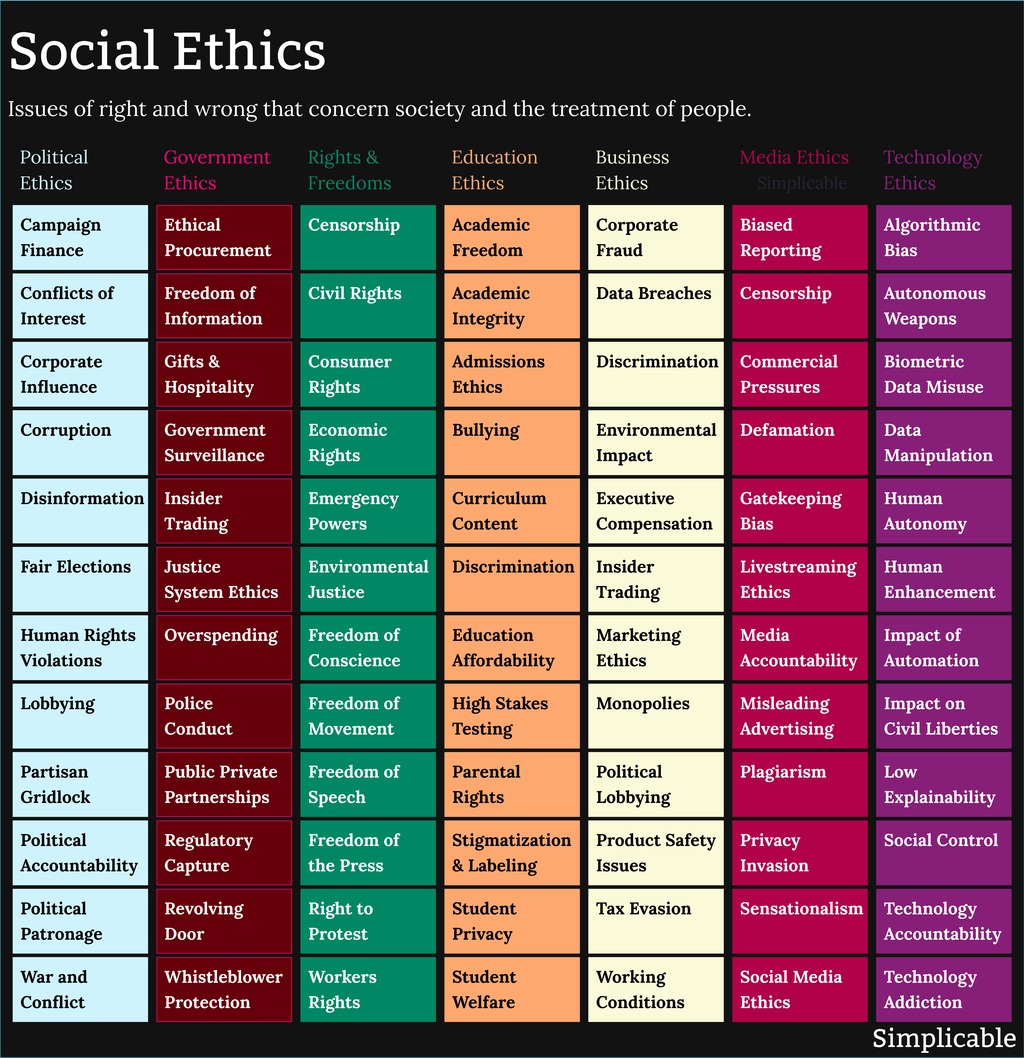
Social ethics are issues of right and wrong that apply to the treatment of people. This describes the ethics of the systems and institutions of a society and the conduct of representatives of these power structures. Social ethics include issues, challenges and dilemmas whereby people feel that a particular situation is unfair or wrong. Ethics also include principles and values that are used to direct the ethics of social institutions and systems. The following are common examples of social ethics.
Political Ethics
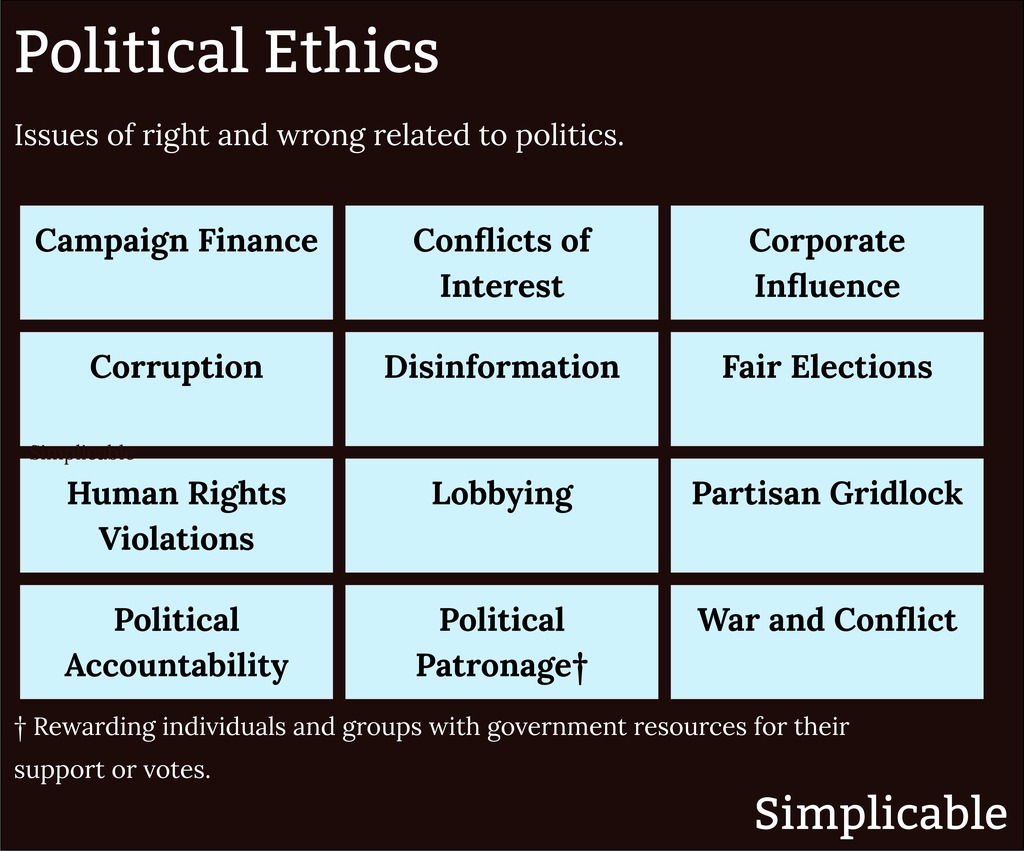
Issues of right and wrong in politics. This relates to the fairness and equality of democratic processes and the appropriate use of political power. Political ethics can also relate to the ethics of political policies and actions that are taken by governments.
Government Ethics
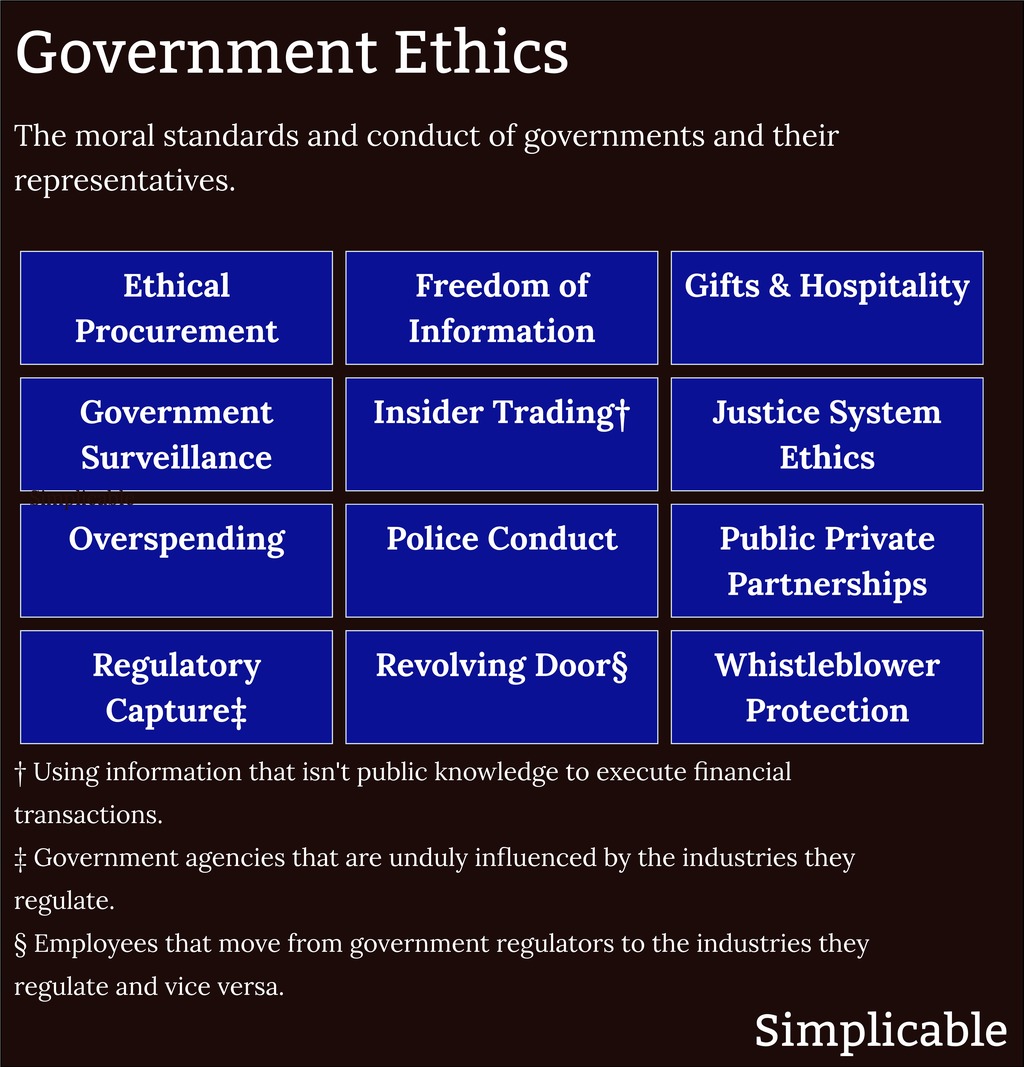
The moral standards and conduct of governments and their officials and representatives. This is centered around governments that do their job according to the law without being influenced by industries, corporations or other power structures.
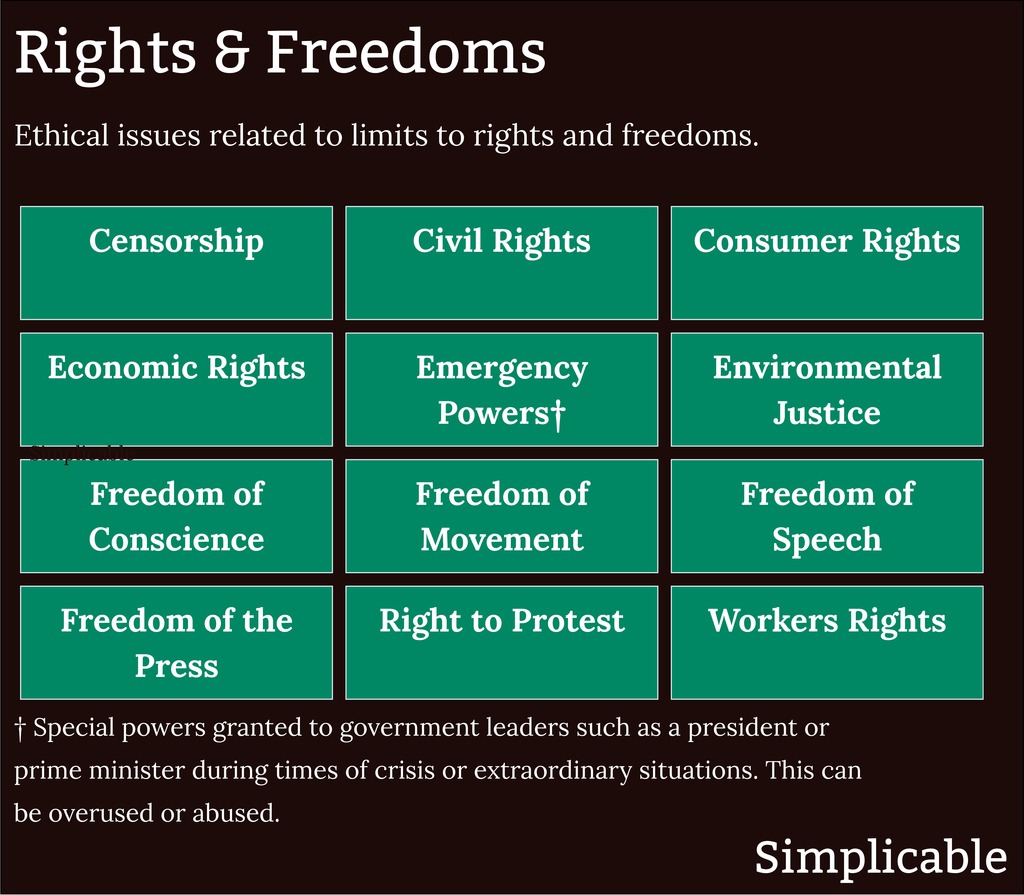
Rights & Freedoms
A lack of rights and freedoms or issues of why and when rights and freedoms can be limited or taken away. Rights and freedoms can create ethical dilemmas with no easy solution as one person's freedom can harm another person's rights. For example, your freedom to stay up playing loud music late into the night may harm your neighbor's right to enjoy their property in peace. As such, rights and freedoms are often limited in various ways and whether this is fair or unfair generates ethical questions or issues.
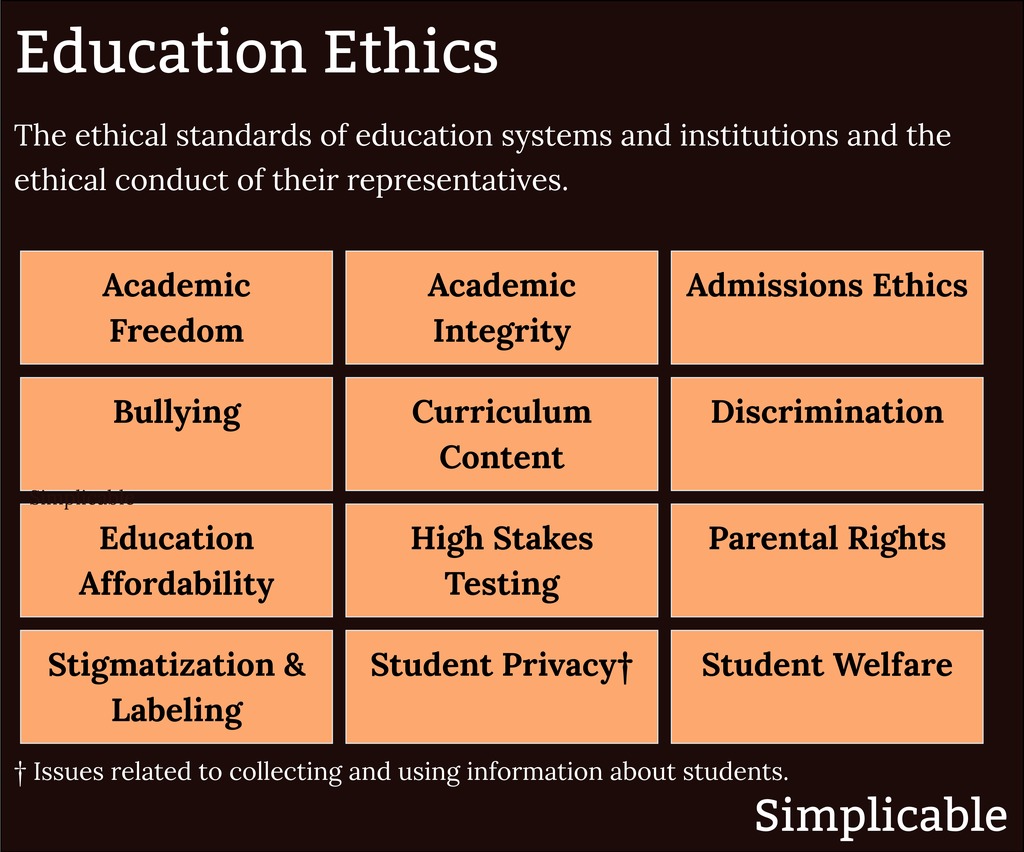
Education Ethics
Questions of right and wrong that pertain to education systems, institutions, practices and the conduct of educators. This relates to fairness in helping each student to thrive, learn and enjoy the education experience. While this sounds simple enough, there are complex dilemmas in education ethics such as how to help students with special needs without labeling or stigmatizing them.
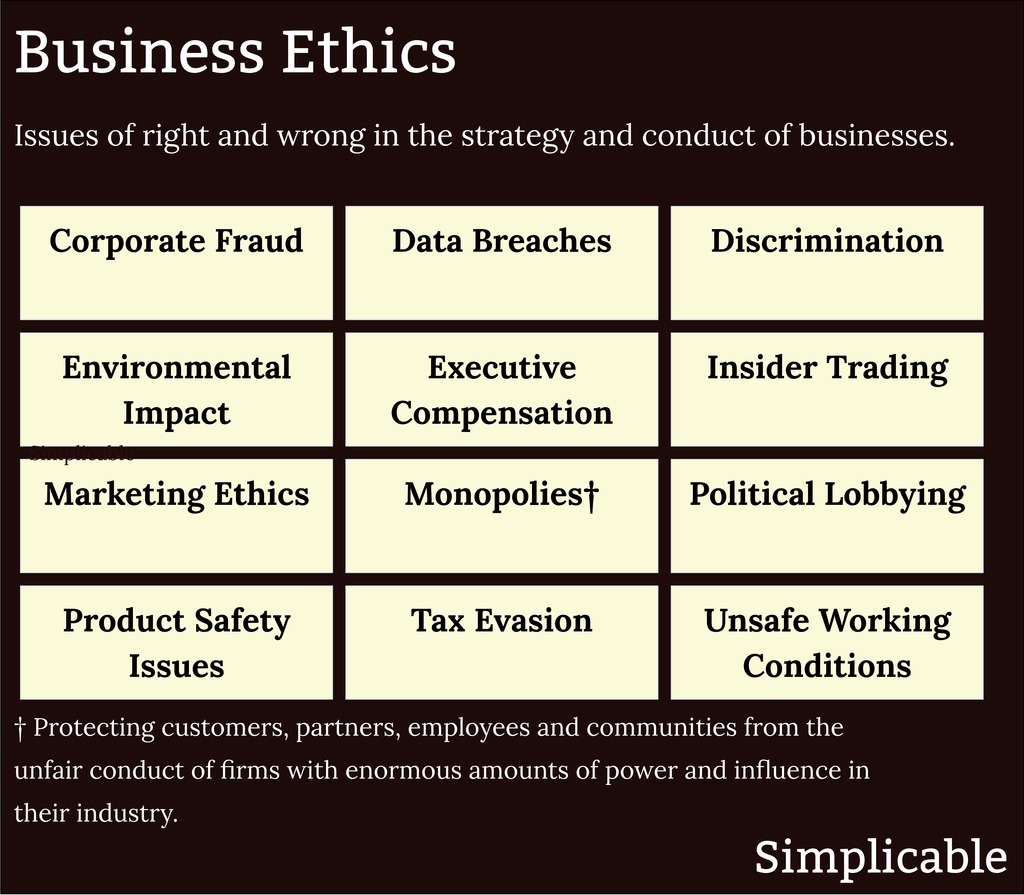
Business Ethics
Ethics concerning the impact of business on people and planet. This goes beyond compliance with the law to look at what is actually right and wrong. For example, overcompensation of executives and avoidance of taxes by large firms.
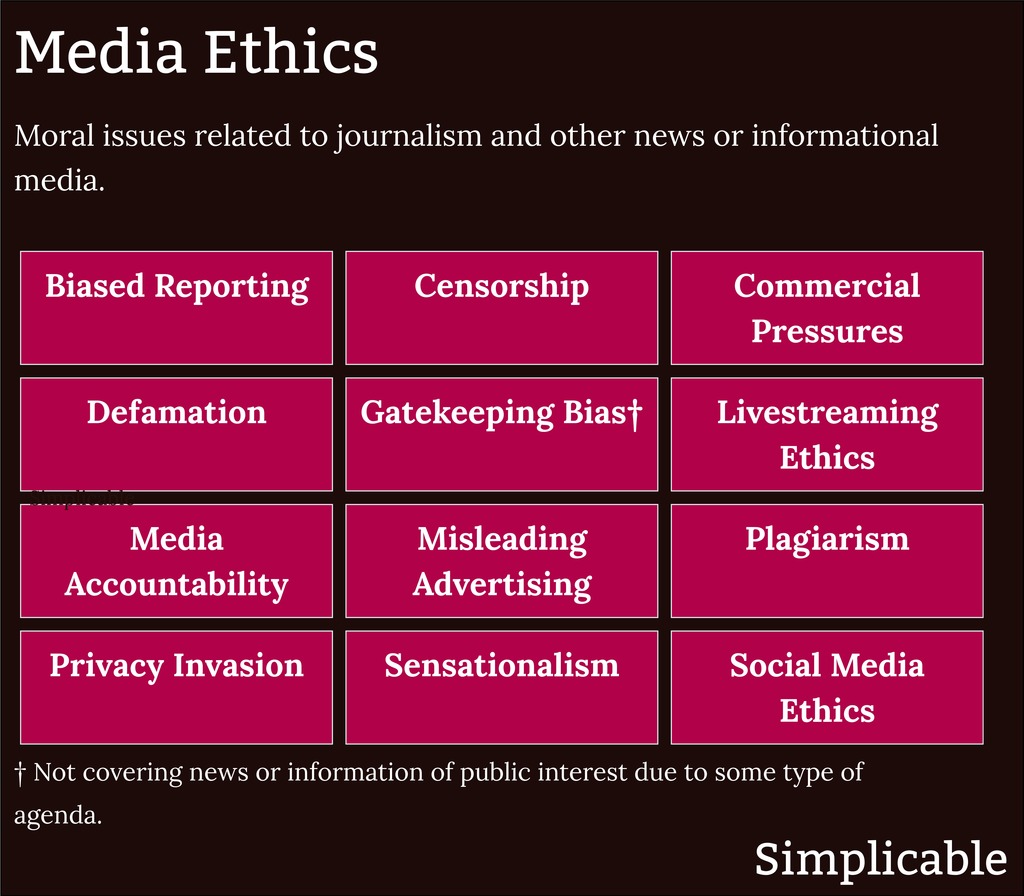
Media ethics is traditionally centered around journalistic integrity. This is slowly adapting to a large number of new issues whereby there is mass participation in media via social media including livestreaming whereby anyone can broadcast live.
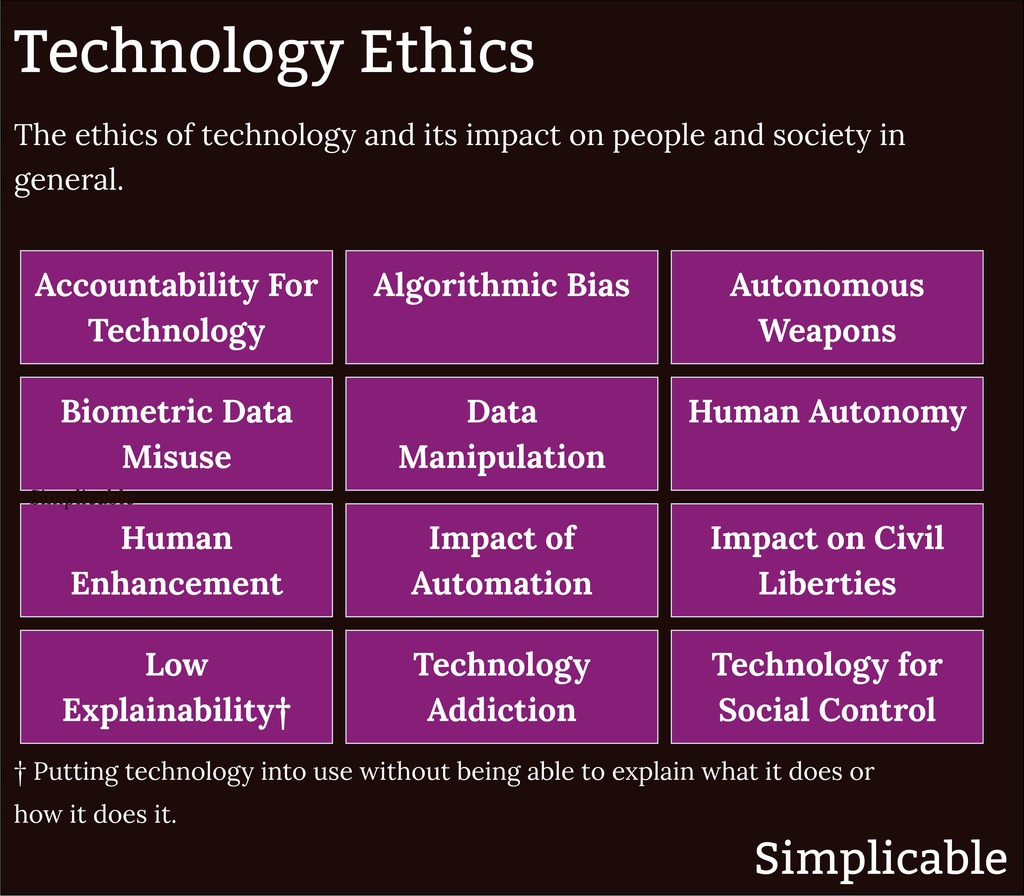
Technology Ethics
Issues related to the impact of technology on people and society in general and whether or not this is right or wrong. For example, technologies that take over control of things without respect for human autonomy and choice.
Cookies help us deliver our services. You have choices regarding these cookies. Please visit our privacy policy, cookie policy and consent tool to learn more.
Copyright 2002-2026 Simplicable. All rights reserved. This material may not be published, broadcast, rewritten, redistributed or translated. Report violations here.