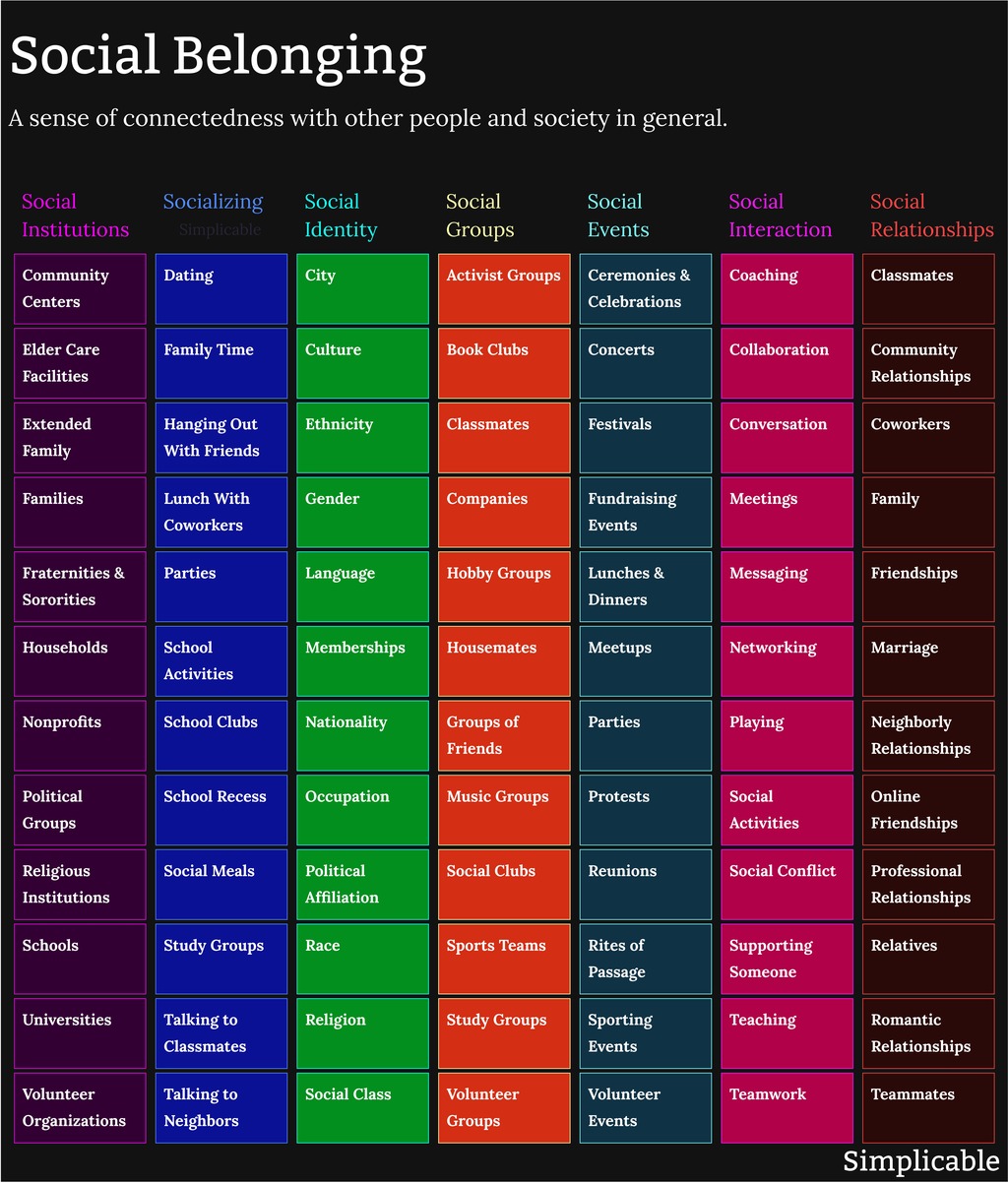
Social belonging is a sense that one is included and engaged with others. People are social creatures such that social belonging is foundational type of human need. Belonging creates a sense of social identity, connectedness and fulfillment and is important to cognitive and emotional development and life satisfaction. The following are common sources of social belonging.
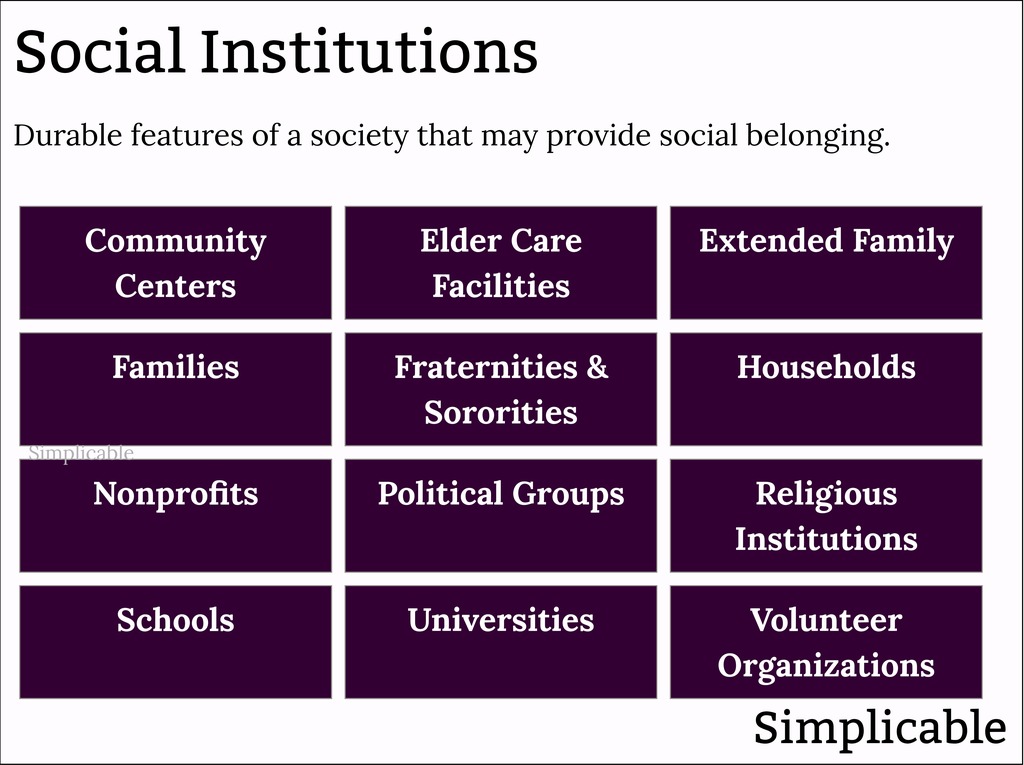
Social Institutions
Institutions are durable features of a society that provide structure and stability. Family is the primary social institution that provides social bonding and support for members. Gaining membership in social institutions is perhaps the best way to build social connections and sustained relationships. For example, membership in a school can potentially provide a large number of social opportunities.
Socializing includes any interactive activity with other people such as playing during school recess or lunch with coworkers. Socializing tends to be a fulfilling activity that is important to cognitive and social development in youth and staying mentally active at any age.
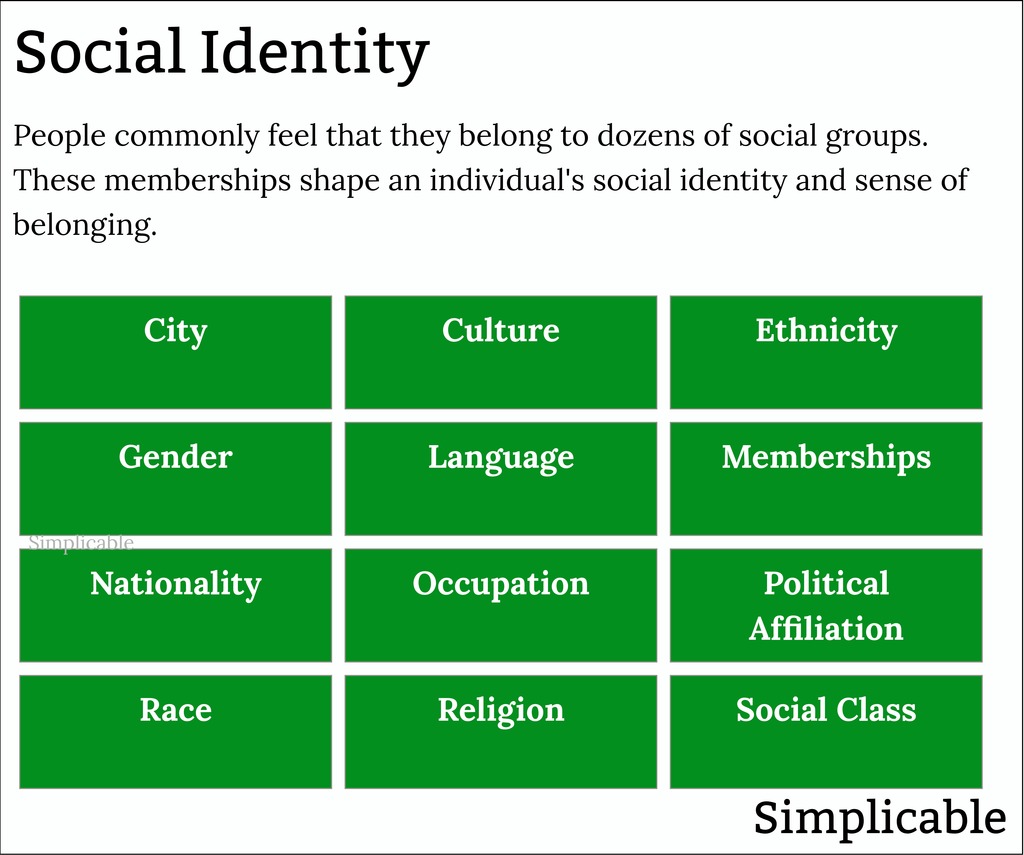
People develop a sense of social identity whereby they feel they belong to various social groups and cultures. This creates a sense of belonging. For example, if you are a great surfer you will correctly feel that you belong to the surfing subculture.
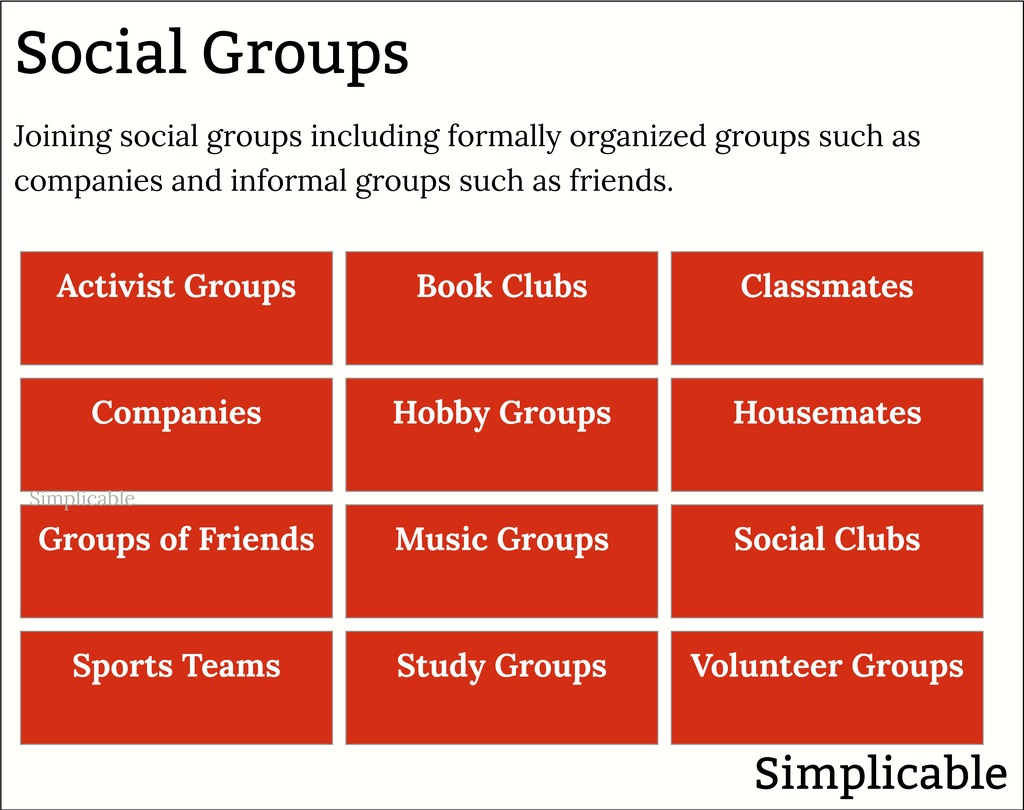
Membership in social groups including formal organizations such as a company and informal groups such as a music band. It is possible for much of your social life to be tied to a single social group. This can create difficult transitions if you need to leave that group. For example, people commonly experience a declining sense of social belonging when they retire as they are suddenly disconnected from a company that served as a social group.
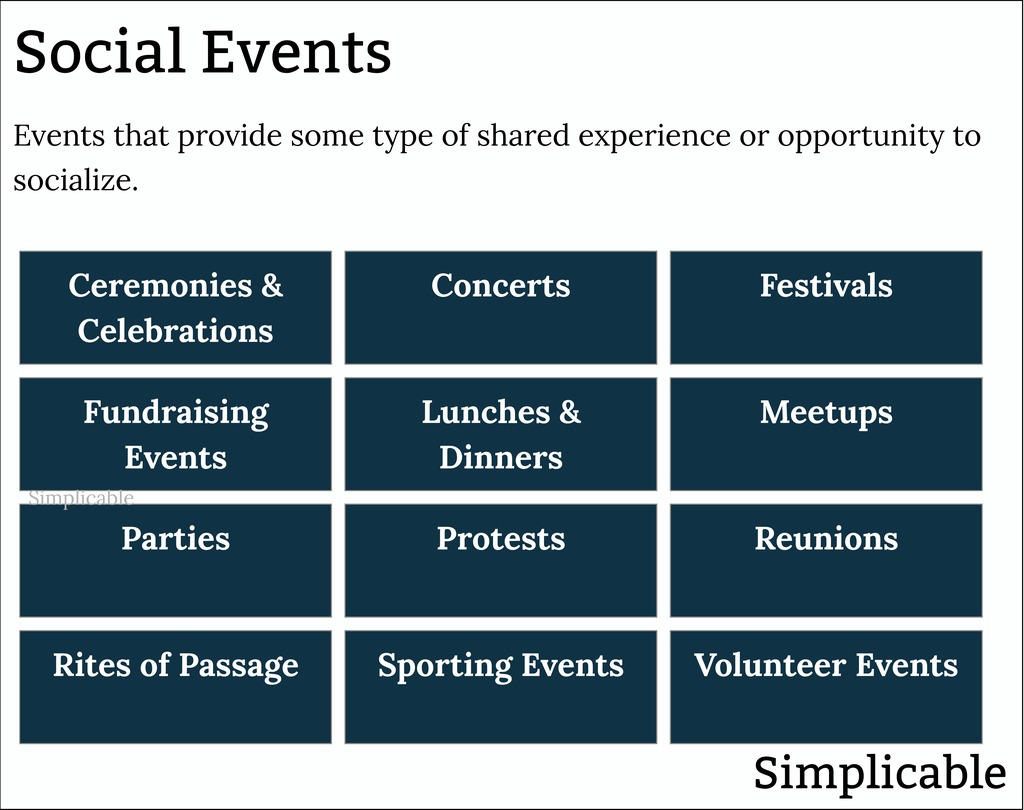
Social events can create a sense of shared experience and belonging. For example, attending a concert whereby you may feel that you are enjoying an experience with an entire audience. Social events include community events, cultural events and events connected to social groups and institutions.
Social Interaction
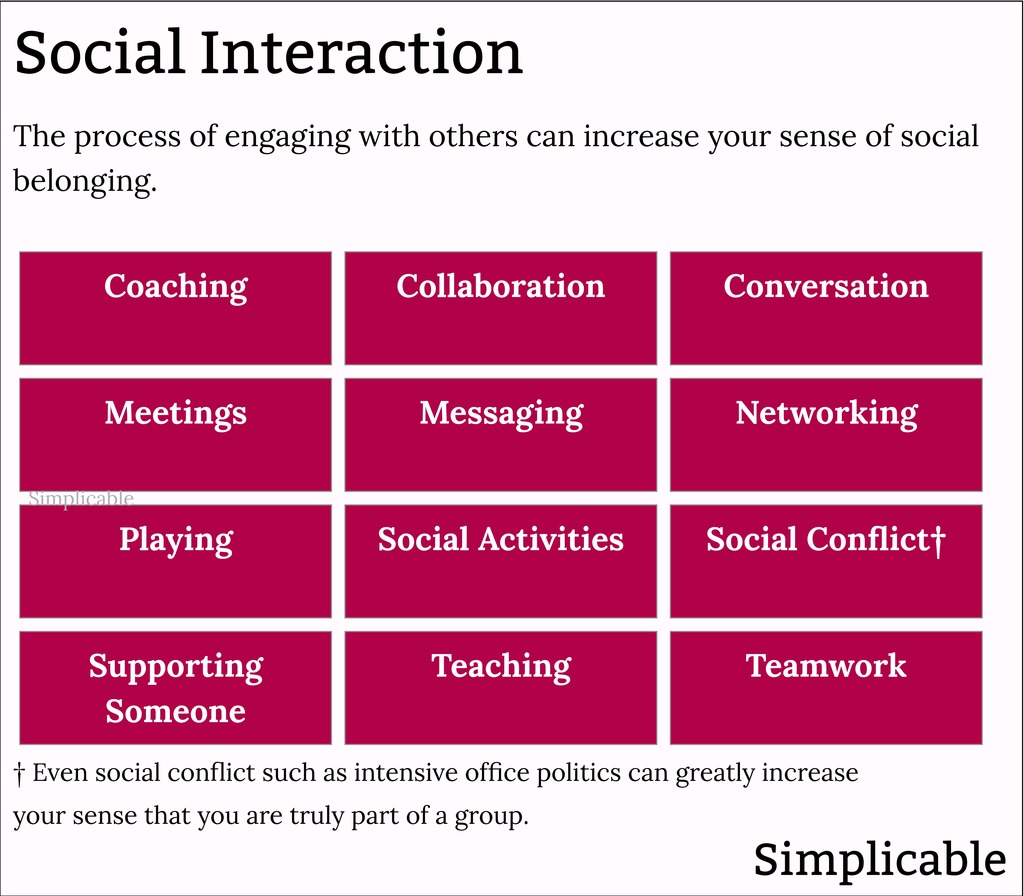
Things that you do with other people. This includes everyday things such as conversation with a neighbor or messaging a friend. Regular social interactions can translate to a greater sense of social belonging. For example, an employee working mostly independently at home may have far less sense of belonging in a firm than someone who is working collaboratively in the office.
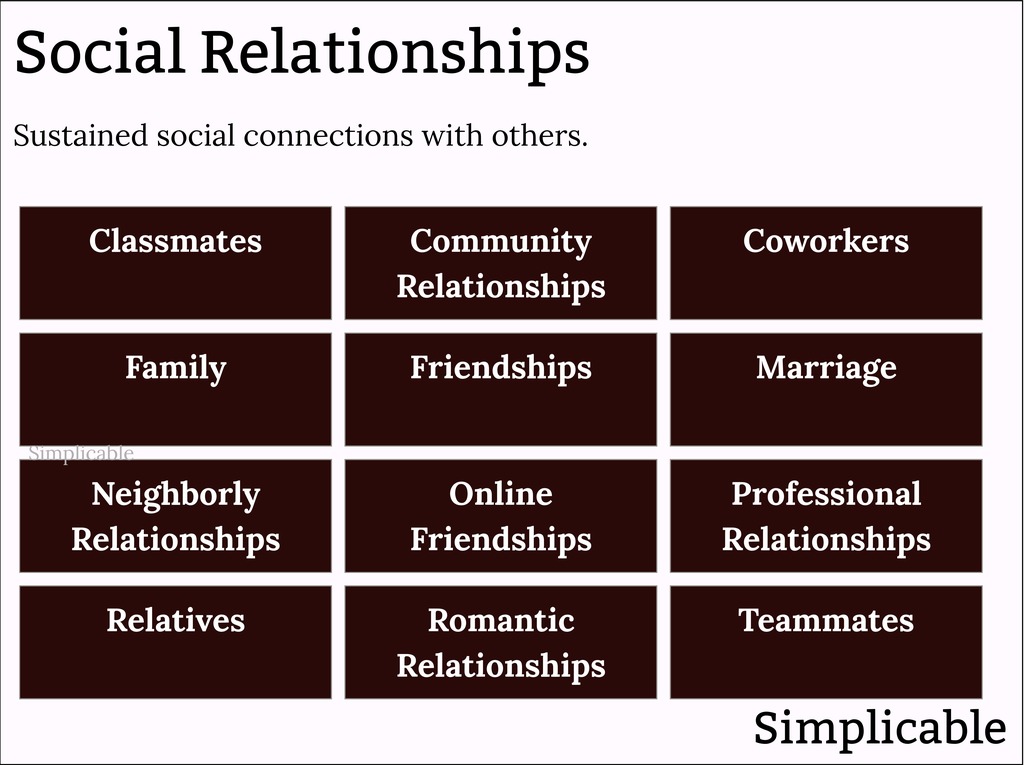
Sustained social connections with others. This is important to people as it creates the sense that others know them and that they're not alone. Where all your social interactions are merely transactional without any sustained relationships, you may develop a sense of disconnection and isolation.
A sense of social belonging greatly influences behavior. For example, it may increase your level of engagement at school and decrease the likelihood that you be dissatisfied or quit†. Even very minor connections to social groups can create a sense of belonging in that group. This can change behavior in significant ways. For example, a fan of a sports team may demonstrate in-group favoritism towards other fans of that team out of a sense of shared identity, shared experience and belonging.
7 Shares
Social Life
This is the complete list of articles we have written about social life.
Cookies help us deliver our services. You have choices regarding these cookies. Please visit our privacy policy, cookie policy and consent tool to learn more.
Copyright 2002-2026 Simplicable. All rights reserved. This material may not be published, broadcast, rewritten, redistributed or translated. Report violations here.