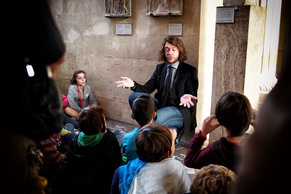
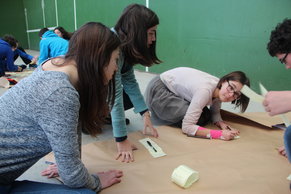
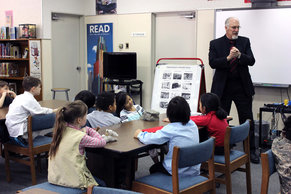
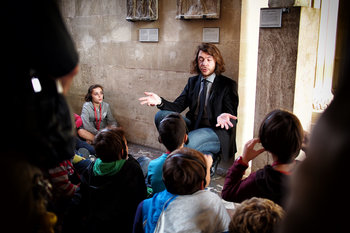
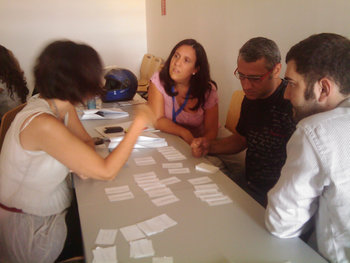
Teaching is the practice of imparting knowledge and guiding the learning process to help students develop comprehension, competence and character strengths. Teaching has several key characteristics:
Curriculum
Planning learning experiences including acquiring useful content, developing exercises and setting learning objectives.
Imparting Knowledge
The process of helping students to develop an in-depth understanding of subject material. This goes beyond memorizing facts to the process of developing an intuitive understanding of first principles with broad explanatory power. For example, discussions, reading and exercises designed to give students a comprehensive understanding of a key social concept such as freedom or duty.
Facilitating Learning
Helping students to engage with subjects, concepts and materials including structured learning planned by the teacher or supporting self-directed learning planned by the student.
Scaffolding
Providing students with support in their learning process that is gradually decreased and removed in order to build their independent learning skills.
Feedback
Providing regular feedback that encourages students and also provides ways to improve.
Critical Thinking
Encouraging students to engage materials with critical thinking such as challenging assumptions, analysis, arguments, explanations, comparisons and model development.
Competence
Guiding students through learning exercises designed to build comprehension and competence in applying concepts.
Problem Solving
Giving students experience in solving problems by applying knowledge and engaging with materials.
Collaboration
Promoting collaboration between students.
Discussion
Giving students experience discussing subjects including presenting and countering arguments to support a position.
Creativity
Helping students to build foundational creative skills such as composition and visual expression.
Inquiry
Guiding a process of identifying questions and then researching to discover knowledge.
Projects
Giving students the experience of developing knowledge artifacts such as essays or science fair projects.
Formative Assessment
Ongoing assessments that help to identify areas that require more learning. This is used to adapt the learning process based on current learning progress.
Summative Assessment
The process of measuring what students have learned with assessments such as tests, assignments, projects and exams. Students are provided with summaries of their learning achievements such as grades and report cards.
Classroom Management
Maintaining an orderly, safe and productive learning environment.
Engagement
Helping all students to engage with the learning process.
Differentiation
Tailoring learning to the needs, abilities and learning style of students.
Curiosity
Ideally, teaching inspires a love of learning by stirring curiosity and giving students a sense of accomplishment.
Reflection
Encouraging students to reflect on their learning process to find ways to improve.
Role Model
A teacher can serve as a positive role model for students. For example, by demonstrating kindness, patience, respect and fairness.
Values
Imparting values and encouraging positive behavior.
Character
Helping students to develop character strengths such as diligence, determination, perseverance, honesty, kindness and responsibility. For example, an honor system that places trust in students or leadership programs that ask senior students to set a good example for junior students.
Summary
Teaching is the practice of guiding the learning process to help students develop comprehension, competence and character strengths. This involves planning and support of learning processes. A key characteristic of teaching is that it helps students to learn how to learn. Ideally, it also helps students to develop a love of learning and character strengths such as diligence and self-efficacy.
Cookies help us deliver our services. You have choices regarding these cookies. Please visit our privacy policy, cookie policy and consent tool to learn more.
Copyright 2002-2026 Simplicable. All rights reserved. This material may not be published, broadcast, rewritten, redistributed or translated. Report violations here.