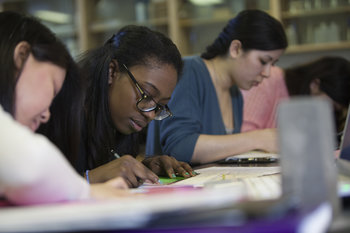
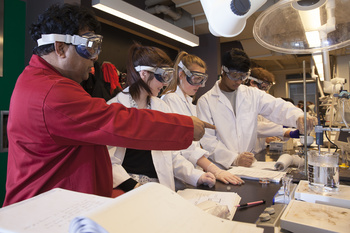
The importance of school includes elements of learning, character development and socialization whereby school provides the experiences necessary to thrive in life. This is not about the facts you memorize but more about how school shapes you as a person and gives you the tools to continually learn and collaborate with others throughout your life.
Foundational Skills
The most critical thing that you will gain from school are foundational skills such as basic literacy and math skills. In the modern age this may be extended to include digital and media literacy.
Socialization
School provides an important social environment for the socialization of children. Likewise, educational environments can be an important source of social connection at any age.
Sense of Belonging
School provides belonging to an institution and social group beyond the family. This is an important early experience that again can remain important at any age. For example, graduate students may continue to enjoy a sense of social connectedness through their school.
Teamwork
Experiences working with others in a cooperate and collaborative way and all the opportunities and difficulties this can present. This is important preparation for real world pursuits such as work.
Conflict Resolution
Building social resilience and the skills to resolve conflicts with others. School can be tough with interpersonal conflict being commonplace. This can help build the resilience to deal with real world social situations. Institutional support is also required to create a reasonably positive environment and to help resolve conflicts as required.
Independence
Independent work and assignments that give students experience completing tasks on their own. This can cultivate cognitive confidence with the process of formulating and presenting your own ideas without socially validating them.
Leadership Experiences
Leadership experiences from simple group work whereby one student typically takes the lead all the way up to official leadership roles such as student government or the captain of a sports team.
Learning How to Learn
School is not about memorizing facts but rather about learning how to learn. This is particularly true in the digital age where information can be easily located and need not be memorized. Modern information environments have also become very complex such that critical thinking skills are all the more important.
Research Experience
Experience with different types of research such as experiments, field research, case studies and general discovery and analysis of information.
Responsibility & Accountability
School requires students to meet certain obligations and deadlines such as being prepared for an important test. This is valuable experience that creates a sense of responsibility and accountability for results.
Character Strengths
School can present the challenges and experiences necessary to cultivate character strengths such as self-discipline and confidence.
Exposure to Different Perspectives
Exposure to a wide range of ideas and perspectives both in materials and in classroom discussions.
Global Awareness
International school trips and exchange programs between schools that allow students to obtain valuable global experience.
Critical Thinking
Developing modes of thinking that are useful to academic pursuits such as challenging assumptions and analysis.
Creativity
Creative expression such as art, design or independent research projects that are completely open-ended.
Sparking Curiosity
Ideally, school doesn't make learning such toil that it damages the natural curiosity of students. Schools can spark curiosity with stimulating curriculum, extracurricular programs and field trips. Likewise self-directed learning provides students with a chance to pursue their interests and curiosity.
Physical Development
The opportunity for free play with peers, outdoor time and diverse physical activities such as sports.
Communication Skills
Developing important communication skills such as presenting an argument, debate and public speaking.
Civic Engagement
Service projects and other opportunities to engage with communities. This can provide unique experiences and transmit ethics such as compassion and altruism.
Knowledge Acquisition
While its true that school is a process of learning to learn as opposed to memorizing facts, school does play a role in transmitting important knowledge such as first principles. In many cases, first principles can be a bit like riding a bicycle whereby they can be difficult to master but once you get them, you've got them for life.
Skill Development
Developing usable skills and mastering talents such as the ability to code or play an instrument.
Career Preparation
Preparing students for working life. This includes important vocational education programs that prepare student for specific professions.
Cultural Experiences
Experiences of culture such as literature, art, music, performance art, cuisine and traditions. This can include local culture and experiences of other cultures.
Relationship Building
Particularly at the university level, the relationships you make at school may end up being valuable in your life and career.
Social Status
Schools are often high status institutions. Belonging to such institutions and having connections to them such as a degree from a universe represent an important type of social status that can have value for an individual.Next read: School Life
John Spacey. "Why School Is Important (25 Key Reasons)." Simplicable. Retrieved November 16, 2026. from https://simplicable.com/edu/why-school-is-important
Cookies help us deliver our services. You have choices regarding these cookies. Please visit our privacy policy, cookie policy and consent tool to learn more.
Copyright 2002-2026 Simplicable. All rights reserved. This material may not be published, broadcast, rewritten, redistributed or translated. Report violations here.