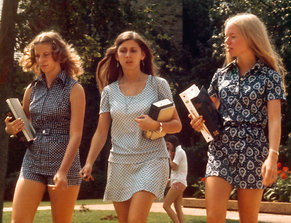
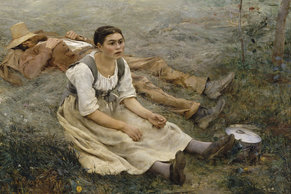
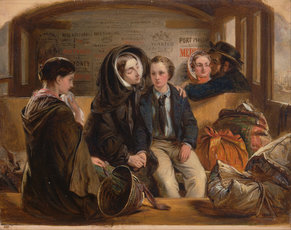
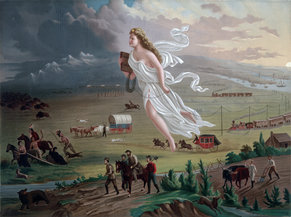
Historical perspective is the way things were viewed and understood at a time and place in the past. There is a vast gap between the way that things are viewed now and how they were viewed in the past such that interpretations of history are inherently influenced by modern ideas. Objective consideration of historical perspective is required to produce valid historical analysis. The following are common elements of historical perspective.
Beliefs
Concepts
Economic Realities
Education
Group Memberships (e.g. family)
Ideology
Information Environment
Language
Life Experiences
Lifestyles
Living Conditions
Norms
Occupation
Politics
Religion
Roles & Responsibilities
Sensibilities
Social Realities
Social Structure (e.g. socioeconomic class)
Symbols
Technological Environment
Traditions
Values
Working Conditions
Historical perspective should not be confused with the political perspective or point of view of a historian.Language changes with time whereby new concepts are added and old concepts may fade. As such, it is very difficult to imagine how people thought in the past.
Another barrier to understanding historical perspective is hindsight bias whereby you know how the future works out. For example, a decision that is reasonable at a time and place that looks irrational in the future due to how things work out.Viewing the past without proper consideration of historical perspective is a bias or fallacy known as presentism.
John Spacey. "24 Examples of Historical Perspective." Simplicable. Retrieved November 16, 2026. from https://simplicable.com/history/historical-perspective
Cookies help us deliver our services. You have choices regarding these cookies. Please visit our privacy policy, cookie policy and consent tool to learn more.
Copyright 2002-2026 Simplicable. All rights reserved. This material may not be published, broadcast, rewritten, redistributed or translated. Report violations here.