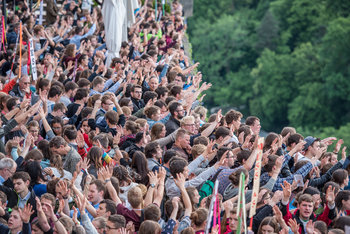
Freedom is the ability to act, speak or think without hindrance or fear of reprisal. This is essentially a limit to what society or others can demand of an individual. The following are the basics of freedom.
Guarantees of Freedom
Societies typically encode certain freedoms in their constitutions and similar artifacts such as a bill of rights. These represent limits to government power whereby a law would be unconstitutional if it goes too far in restricting the individual. For example, modern societies typically guarantee freedom of speech.
Inalienable Rights
Freedoms are typically viewed as inalienable rights whereby you can't sell, trade or give up your freedoms. For example, within a modern society, you are typically free to quit a job at any time and an employer can't create a contract that binds you into a job.
Self-Determination
Self-determination is the process of determining your own values, worldview and goals in life. Historically, many societies were heavily collectivist with few individual freedoms. These societies provided members with roles, goals, responsibilities and a complete worldview. Modern societies tend to leave it up to the individual to find direction in life.
Pursuit of Happiness
Freedom provides individuals with autonomy such that they can make their own decisions as long as their not hurting anyone else. The Declaration of Independence states this brilliantly as the "pursuit of Happiness."
Making Your Own Mistakes
The basic idea behind freedom is that you are free to set your own priorities and make your own decisions. Society must allow you to make your own mistakes and can't step in to prevent you from taking reasonable risks in your life.
Freedom From Oppression
Oppression is unjust treatment or control of others. This is the opposite of freedom and is a constant threat to freedom. This is more than a government thing as other power structures such as monopolies, companies and institutions can be oppressive. For example, a school could be an oppressive environment that aggressively seeks to control the thoughts of students.
Freedom is a Choice
Institutions, social groups and individuals commonly find ways to put social pressures on you that impact your freedom. For example, groupthink whereby you may be under pressure not to express ideas that conflict with an ideology or position. Here you can either choose to submit or choose to be free and possibly face social consequences.
Freedom is a Way of Life
Not all freedoms are inalienable. You can choose to take on roles and responsibilities in life that may greatly reduce your freedom in certain ways. This can make you a part of things and people are commonly happy taking on much responsibility. It is also possible to pursue freedom in life whereby you make choices that free you from the direction of others.
Freedom Creates Responsibility
Freedom often means that you are departing from the direction and protection of social groups to do your own thing. This can create much responsibility. For example, if you're going to start your own business to have creative freedom in your work this may create dozens of new responsibilities such as worrying about marketing, sales and contracts that you didn't face as an employee.
Summary
Freedoms are limits to what society and others can demand of the individual. These include basic inalienable freedoms provided to all members of society and freedoms that you work out in your own life such as being independent and self-employed.
Cookies help us deliver our services. You have choices regarding these cookies. Please visit our privacy policy, cookie policy and consent tool to learn more.
Copyright 2002-2026 Simplicable. All rights reserved. This material may not be published, broadcast, rewritten, redistributed or translated. Report violations here.