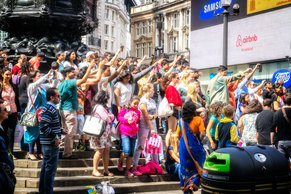
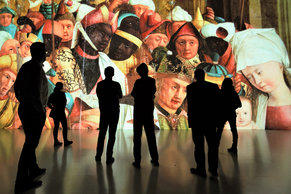
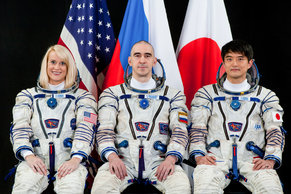
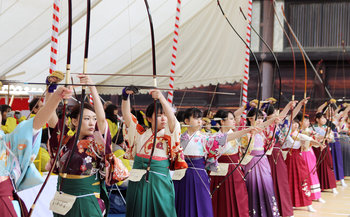
A culture system are the intangible human elements that emerge around social and economic systems. At the level of society these systems are well defined and include things like laws that are written down and infrastructure that is tangible. Culture is opposite -- it is completely intangible and shaped by the people who participate in it. This emerges with time and can't be centrally controlled. It is also ambiguous with no authority that can define the rules of a culture at a point in time. The following are common examples of a culture system.
Class Culture
Community Culture
Consumer Culture
Ethnic Culture
Family Culture
Finance Culture
Global Culture / Cosmopolitanism
Holiday Culture (e.g. Halloween Culture)
Ideologies
Industry Culture
Institutional Culture (e.g. culture of a university)
Internet Culture
Language
Market Culture
Media Culture
Music Scenes
National Culture
Neighborhood Culture
Political Culture
Professional Culture
Religions
School Culture
Social Media Culture
Subcultures
Super Cultures
Technology Culture
The Art World
The Culture Surrounding a Sport
Traditional Culture
Working Culture
Culture is the top level of a system whereby systems tend to move with culture. For example, you can set all the policies, procedures and internal controls that you want for an organization but the organization will continue to be greatly defined by its culture -- an intangible force that emerges with shared experience such that it is beyond the control of management.
Cookies help us deliver our services. You have choices regarding these cookies. Please visit our privacy policy, cookie policy and consent tool to learn more.
Copyright 2002-2026 Simplicable. All rights reserved. This material may not be published, broadcast, rewritten, redistributed or translated. Report violations here.