






Aesthetics | Artistic traditions |
Celebrations | Ceremonies |
Communication styles | Craft traditions |
Cuisine | Cultural change |
Cultural diversity | Customs |
Dance traditions | Dining practices |
Etiquette | Fashion |
Festivals | Folklore |
Gestures | Grooming practices |
Holidays | Hospitality customs |
Intercultural communication | Language |
Language diversity | Literature |
Material culture | Media culture |
Morality | Multiculturalism |
Music traditions | Myths & legends |
Narratives | Non-verbal communication |
Norms | Pastimes |
Performing arts | Philosophical beliefs |
Politeness | Rights & freedoms |
Rites of passage | Roles & responsibilities |
Sense of collectivism | Sense of individualism |
Sensibilities | Shared references |
Slang | Social expectations |
Symbolism | Time perception |
Traditional clothing | Values |
Work ethic | Worldview |
Norms
Norms are the unspoken rules, expectations and assumptions of a culture. For example the unspoken rule that you cover your mouth when coughing.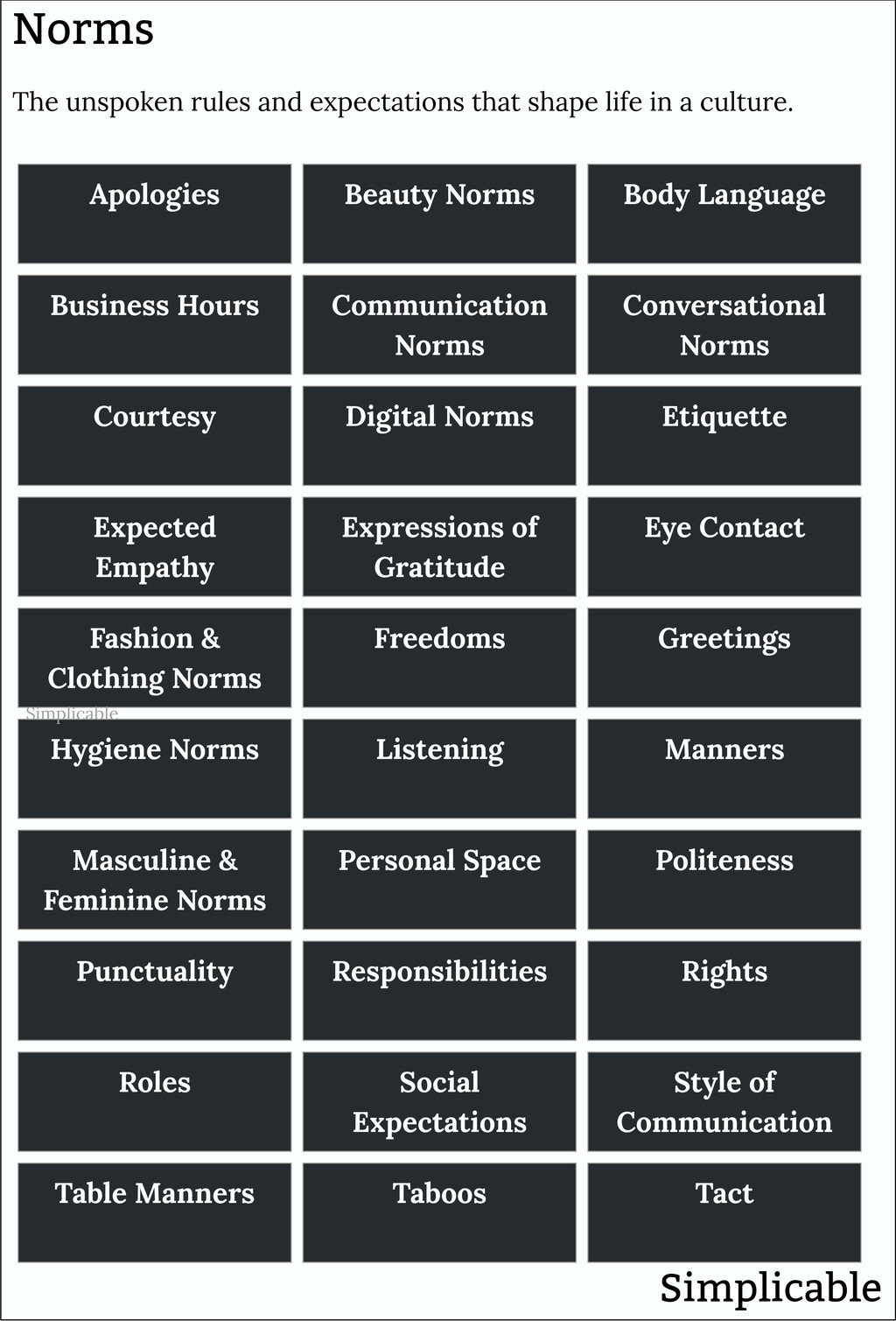
Traditions
Practices that have been sustained over many generations. These provide stability, common references, cross-generational experiences and are typically designed to make life meaningful and rich.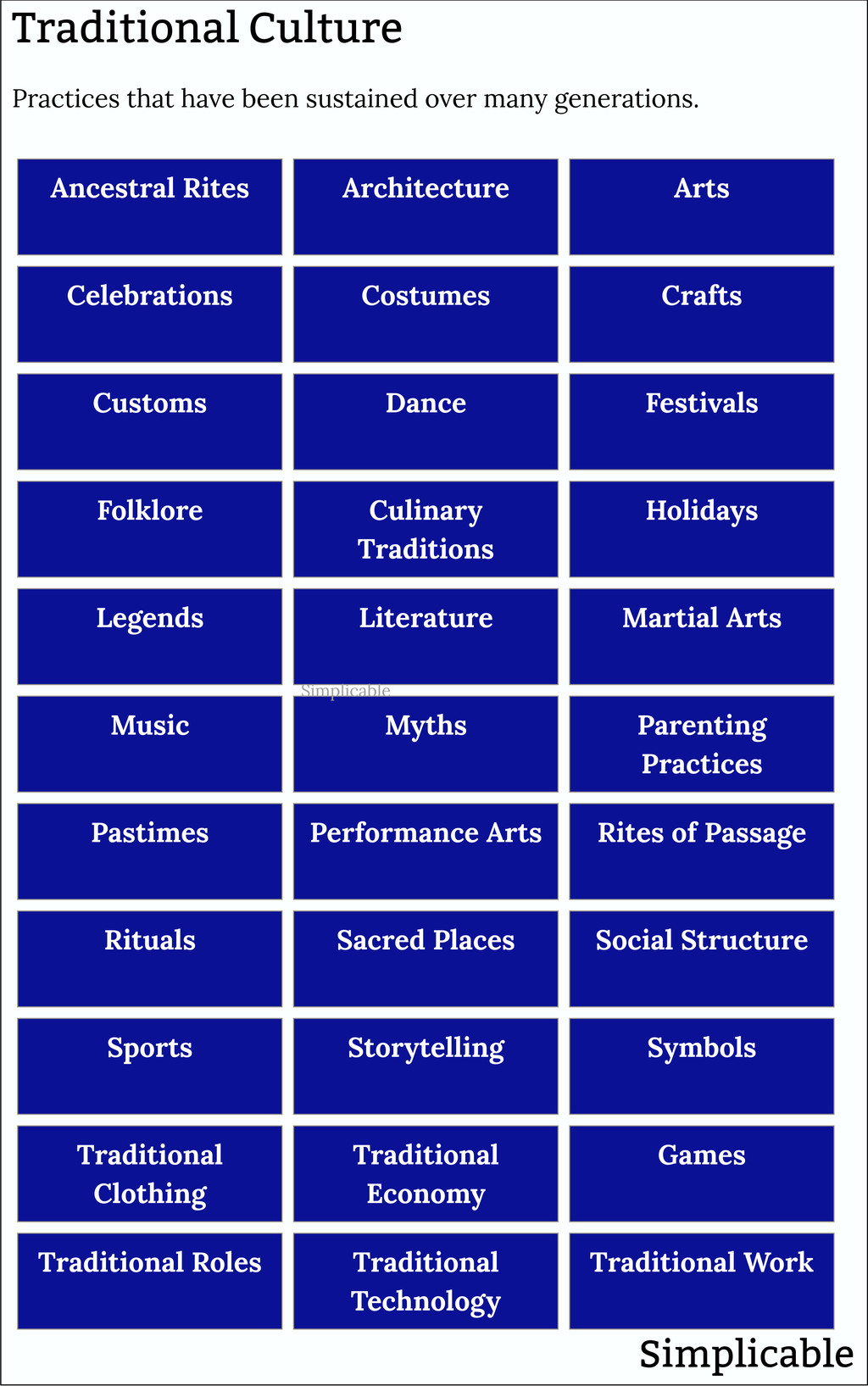
Cultural Beliefs
Culture can influence a great range of beliefs, values, attitudes and perceptions.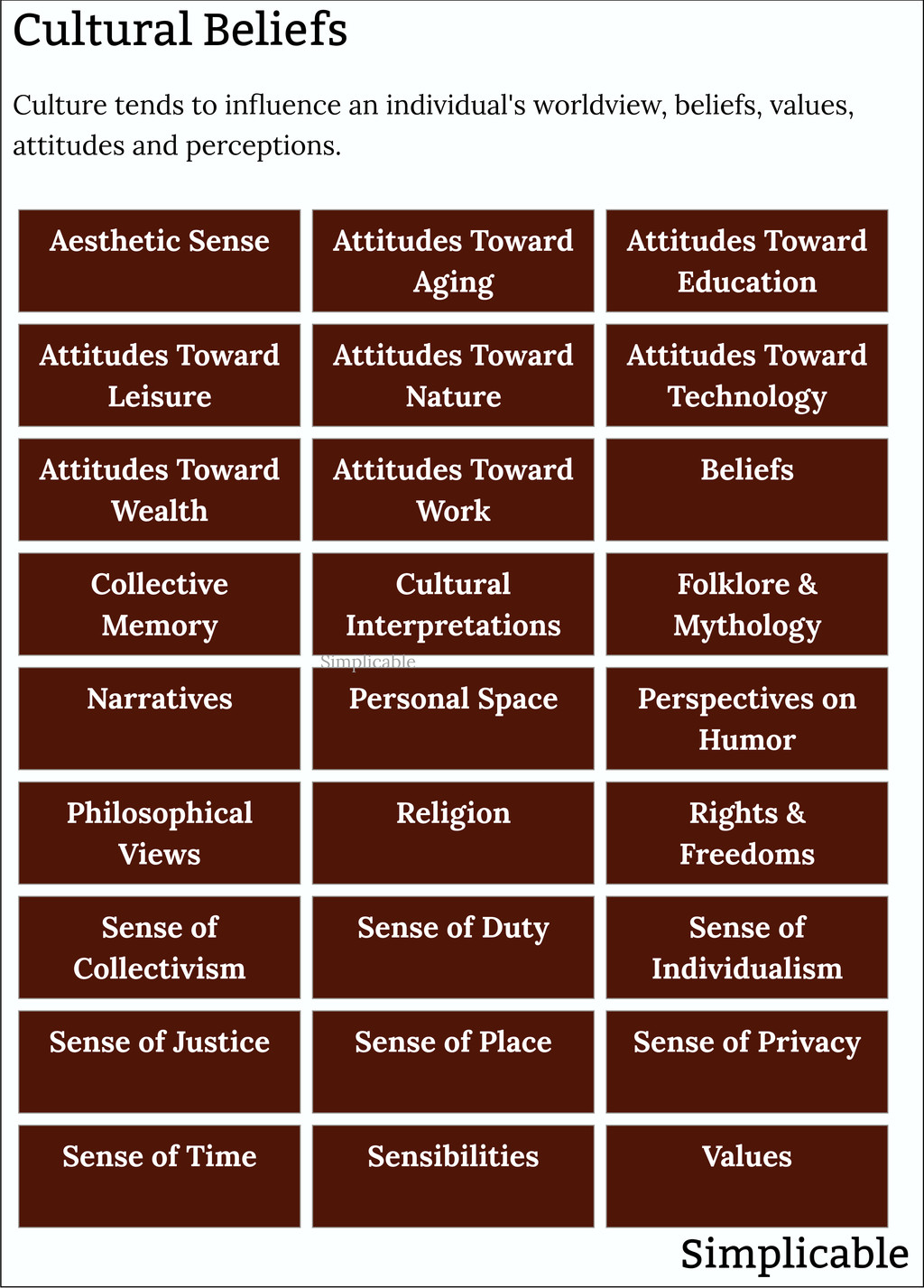
Summary
Culture includes norms, traditions and beliefs that potentially influence every aspect of life. The cultural environment is often complex with many cultures overlapping such that individuals have to decide which culture to apply to each situation. The following is an overview of the cultural environment with more examples.