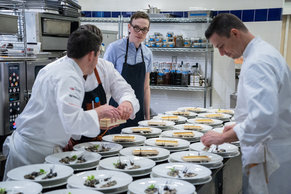
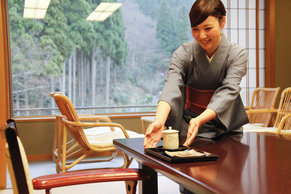
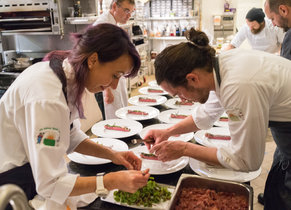
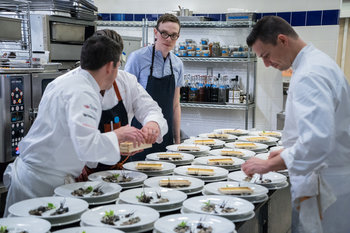
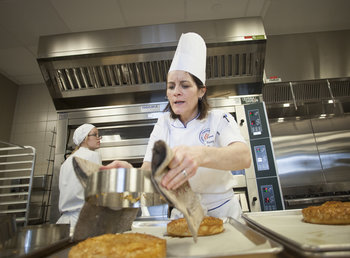
Restaurants are businesses that serve prepared food and beverages to customers. Restaurants may also offer intangible value such as service, decor, ambiance, social environment, social status, entertainment and experience. The following are common types of restaurant including types of food, business model, service model and tradition.
A la Carte
All-you-can-eat
Asian Fusion
Automat
Bakery
Bar
Beer Garden
Bistro
Brasserie
Breakfast Restaurant
Brewery / Craft Beverage
British Pub
Buffet Restaurant
Cafe
Cafeteria
Cake Shop
Carts & Stands
Casual Dining
Catering
Chinese
Cocktail Bars
Coffeehouse
Concession
Contemporary Cuisine
Conveyor Belt Sushi (Kaitenzushi)
Cook-It-Yourself
Destination Restaurant
Dim Sum
Diner
Dining Car
Dinner Theater
Family Dining
Farm-To-Table
Fast Food
Fine Dining
Food Court
Food Hall
Food Trucks
Franchise (chain)
French
Full Course
German
Ghost Restaurant
Greek
Hawaiian
Indian
Irish Pub
Italian
Izakaya
Korean
Lebanese
Lounge
Luncheonette
Mediterranean
Member's Club
Mexican
Mongolian Barbecue
Noodle Shops
Organic / Sustainable
Osteria
Pancake / Waffle House
Patisserie
Pizzeria
Pop-Up Restaurant
Pub
Ramen / Soba / Udon
Regional Cuisine
Ristorante
Sandwich Shops
Seafood Restaurant
Spanish
Steakhouse
Sushi Bar
Table d'hôte / Prix Fixe / Set Menu
Takeout
Tapas / Tasca
Teahouse
Teppanyaki
Terraces
Thai
Theatrical Restaurants
Themed Restaurants
Trattoria
Truck Stop
Vegetarian / Vegan
Vietnamese
Virtual Restaurant
A la carte is the ability to order individual menu items. This is the norm in the United States.All-you-can-eat includes buffets and restaurants with table service whereby customers order unlimited a la carte menu items for a fixed price.An automat is a restaurant run by vending machines. This is an old business model with many new variations whereby robots can potentially provide proper table service.
Fusion is the combination of different cuisines into a single restaurant or single dish.A bistro is a small restaurant that serves modest meals that are often homestyle.A brasserie is another French term for a casual restaurant. Generally speaking, these are slightly more fancy than a bistro.
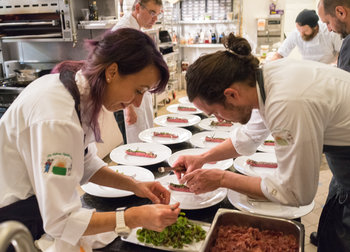
Casual dining includes any full service restaurant that can't be considered fine dining.Fine dining is a relatively expensive restaurant that requires a high standard of food, decor, service and reputation to survive in a competitive market.Coffeehouse is another term for cafe. Some coffeehouses are large, dark, cavernous places with expensive coffee and cheap food. This would be a good definition.
A concession is a restaurant that has paid for access to captive customers. For example, a restaurant at an airport where things may be overpriced and mediocre due to a lack of competition.Contemporary cuisine is a term for restaurants that are trying something unique or trendy such that they part with tradition.A destination restaurant is a restaurant that inspires people to travel some distance to visit it.Dim sum is a traditional Chinese breakfast or brunch where people take small dishes such as dumplings from carts as they pass. Dishes are shared and tea is often included or inexpensive.
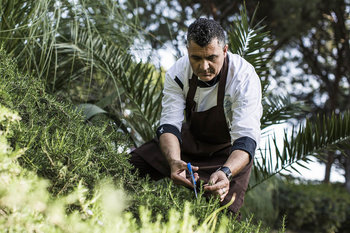
In the United States, family dining is a restaurant with large portions that are shared.Farm-to-table is a situation where a restaurant has a direct relationship with the producers of food such that they can tell you how ingredients were cultivated.Full course is fine dining with more than 3 courses. In many cases, the chef selects the entire menu with no choices. Alternatively, there may be two or three choices. The limited choice means that you are trusting the chef to deliver a meal as an entire experience.A ghost restaurant is a restaurant that does mostly delivery such that there are no customers in the shop.A virtual restaurant has no shop such that it is delivery only.An izakaya is a Japanese style pub.A lounge is a large space with comfortable furnishings. These are often found in larger facilities such as resort hotels and may have a restaurant.A luncheonette serves light, inexpensive lunches.Osteria is an Italian term for a simple restaurant with limited menu options and seating.A patisserie specializes in pastries and sweets.A pop-up restaurant is a temporary restaurant that is typically set up for an event such as a festival or concert.Ramen, soba and udon are different types of Japanese noodle shop with the primary difference being the noodles themselves.Table d'hôte or prix fixe is a restaurant with a limited menu of courses or sets. This is the opposite of a la carte.Tapas is a Spanish appetizer or snack. As restaurants, these are drinking places whereby you can order small dishes with drinks.Teppanyaki was a Japanese attempt at an American steakhouse that was misinterpreted as traditional Japanese cuisine. This all occurred just after WWII and was exported to America where it is still quite common. This is an interesting example of the pizza effect.Theatrical restaurants provide an immersive performance such as a waiter who is also a ninja or magician.Themed restaurants include extensive decorations and atmosphere along some theme such as music.A trattoria is an Italian restaurant that isn't fine dining but isn't as informal as an osteria either. In this context, ristorante is the term for formal dining.
Notes
Where a restaurant provides service it is part of the hospitality industry alongside any business that hosts guests.
53 Shares
Business Models
This is the complete list of articles we have written about business models.
Cookies help us deliver our services. You have choices regarding these cookies. Please visit our privacy policy, cookie policy and consent tool to learn more.
Copyright 2002-2026 Simplicable. All rights reserved. This material may not be published, broadcast, rewritten, redistributed or translated. Report violations here.