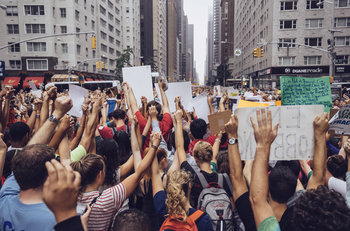
Social structures are the elements of a society and the relationships between them. This is a limited type of view that is used to understand the parts of a society and how they fit together. This is analogous to the structural design of a building that shows you the floors and shape of the building but tells you nothing about what goes on inside. The following are common types of social structure with examples of each.
Political
The structures that are used to make decisions as a society or group of societies. For example:
Federal Government
Interest Groups
International Organizations
Municipal Government
Political Parties
State Government
Economic
The entities that play a role in economic production and distribution.
Financial Intermediaries
Firms
Industries
Labor
Markets
Monetary Authority
Public Services
Regulatory & Tax Agencies
Cultural
Shared institutions that are potentially freely formed without state interference.
Art Institutions
Entertainment Industry
Languages
Media Industry
Music Industry
Norms
Publishing Industry
Religion
Sport
Subculture
Super Culture
Traditions
Social
The structure of social groups.
Communities
Ethnicity
Family
Gender
Generations
Nationality
Professions
Socioeconomic Class
Relational Structure
Listing out the entities as above can be considered a structure. It is also common to draw relationships between entities. This is often a simple hierarchy such as upper class → bourgeoisie → middle class → working class → lumpenproletariat.
Macrostructure
The top level structure of a society. These include very large entities such as "government."
Microstructure
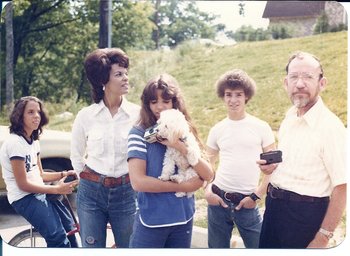
In practice, it is possible to view the structure of societies at many different levels. Where these list relatively small entities they are described as microstructure. For example, family structures such as grandparents, parents and children could be viewed as microstructure.
Cookies help us deliver our services. You have choices regarding these cookies. Please visit our privacy policy, cookie policy and consent tool to learn more.
Copyright 2002-2026 Simplicable. All rights reserved. This material may not be published, broadcast, rewritten, redistributed or translated. Report violations here.