













All (160)
Social (57)
Emotional (34)
Personal (30)
Work (31)
Character Traits (20)
Accountability | Adaptability |
Advocating For Others | Apologizing |
Assertiveness | Being Approachable |
Being Emotionally Available | Being Fully Present |
Being Real With Others | Being Reliable |
Body Language | Bonding With Others |
Boundary Setting | Calculated Risk-Taking |
Calmness | Candor |
Collaboration | Communication |
Compassion | Conflict Resolution |
Consensus Building | Continuous Learning |
Contributing Ideas | Cooperation |
Creative Problem Solving | Curiosity |
Decision Making | Delivering to Committments |
Dependability | Diligence |
Diplomacy | Direct Communication |
Emotional Courage | Emotional Depth |
Emotional Intelligence | Emotional Regulation |
Emotional Resilience | Emotional Restraint |
Emotional Support | Empathy |
Encouraging Others | Engaging Others |
Enthusiasm | Establishing Credibility |
Ethical Judgment | Expressing Sympathy |
Expressing Understanding | Expressing Vulnerability |
Eye Contact | Facial Expressions |
Facilitation | Fairness |
Feeling For Others | Finding Common Ground |
Flexibility | Focus |
Forgiving Others | Generosity |
Giving Compliments | Goal Setting |
Grit | Group Communication |
Habit Formation | Influencing |
Initiating Conversation | Initiative |
Introspection | Intuition |
Kindness | Leadership |
Learning Agility | Learning From Failure |
Listening | Making Conversation |
Managing Emotions | Mental Toughness |
Motivation | Navigating Change |
Navigating Office Politics | Negotiation |
Networking | Not Gossiping |
Nuanced Communication | Nurturing Others |
Opening Up | Openness |
Organization | Patience |
Perseverance | Persistence |
Personal Energy | Personal Resilience |
Perspective-taking | Persuasion |
Planning | Politeness |
Positive Mindset | Positive Thinking |
Pragmatism | Prioritization |
Problem Solving | Productivity Skills |
Professionalism | Providing Feedback |
Question Asking | Rapport Building |
Receiving Compliments | Receiving Feedback |
Recognizing Emotion | Recognizing Moods |
Redeeming Oneself | Relationship Building |
Resilience Under Stress | Resourcefulness |
Respectfulness | Respecting Confidentiality |
Respecting Differences | Respecting Other People's Time |
Seeking Help | Self-Acceptance |
Self-Advocacy | Self-Awareness |
Self-Confidence | Self-Control |
Self-Determination | Self-Discipline |
Self-Efficacy | Self-Evaluation |
Self-Expression | Self-Improvement |
Self-Motivation | Self-Presentation |
Self-Reflection | Self-Restraint |
Selflessness | Sense of Gratitude |
Sense of Humor | Setting Expectations |
Sharing Credit | Sharing Experiences |
Sharing Resources | Sincerity |
Small Talk | Social Cue Recognition |
Social Perceptiveness | Strategic Thinking |
Study Skills | Supporting Others |
Tactfulness | Taking Ownership |
Taking Responsibility | Teamwork |
Time Management | Time Prioritization |
Trust Building | Trusting Others |
Trustworthiness | Viewing Others Positively |
Visioning | Work Ethic |
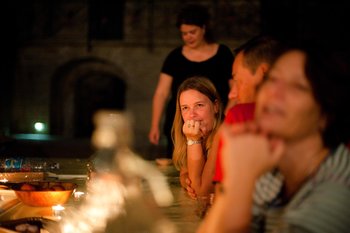
Social Skills
Social situations and relationships represent the most complex and potentially challenging area of behavior. Social skills are inherently behavior skills whereby things like communication are really a behavior. These are improved with experience and with positive examples to learn from.Emotional Skills
The ability to identify emotions in yourself and others and to express and use emotion in positive ways. For example, being aware of your emotional tone when communicating. This is important because people will often respond more to your emotional presence than to what you say.Beyond social situations, emotional skills allow you to shape your behavior and thinking in positive directions. For example, coping strategies that allow you to transform negative emotions that are dragging you down toward more constructive states of mind.Personal Skills
Behavior is more than social. For example, your ability to work on something -- to create a vision of the future and make it happen. Personal behavioral skills often center around disciplined behavior such as self-control and self-improvement. However, personal skills also include abilities such as intuition and self-expression that are more on the free and creative side of things.Work Skills
Professionalism often demands highly regimented behavior. For example, the ability to remain perfectly constructive and polite when dealing with a difficult customer. Likewise, professional pursuits often require deep social skills such as leadership, influencing and negotiation.Summary
Behavioral skills are abilities related to shaping your behavior including social behavior and individual behavior. This includes emotional skills because emotions can greatly influence behavior in both of these domains.