Adaptive reuse is the reuse of architecture for a new purpose. This is often viewed as a sustainable strategy that avoids the waste of demolishing a building to build a new one. Adaptive reuse can also preserve or partially preserve buildings of historical significance in a practical way that sees them used by the community. The following are common types of adaptive reuse.
Historical Preservation
Reusing a historic building with an effort to preserve or restore its original state. For example, an art museum in an old factory that partially preserves elements of the original building.
Renovation
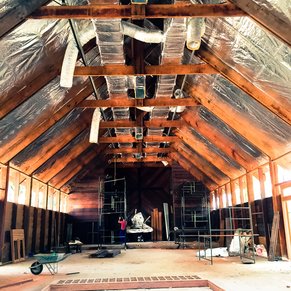
Renovation that replaces much of the building that may be in poor repair. In many cases, the basic structure and external appearance of the original building is maintained but the inside is completely different.
Use of one of more external walls of a building as a facade for a new building. This can allow a new building to have a historic look while being useful and energy efficient. As a practical solution this is popular with developers but not amongst those who seek to preserve the history of a city. A facade can be a compromise for a building that is excessively poor repair or a site with little historical value.
Integration
Building around the original structure such that it remains but is encompassed by a new building. For example, student apartments built into a historic water tower.
Cookies help us deliver our services. You have choices regarding these cookies. Please visit our privacy policy, cookie policy and consent tool to learn more.
Copyright 2002-2026 Simplicable. All rights reserved. This material may not be published, broadcast, rewritten, redistributed or translated. Report violations here.