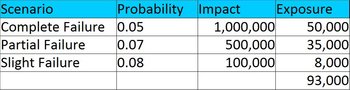
Comparative risk is the process of identifying, analyzing and comparing risks to support decision making and processes. The following are common examples.
Sustainability
The term comparative risk is associated with sustainability. The best-available techniques in an industry may consume resources and produce waste. As such, sustainability is often about comparing risks and taking the least damaging path.
Health & Medicine
Planning for community health or recommending medical treatments is often a process of weighing competing risks. For example, nutrition recommendations might require trade-offs based on the food products available to a community.
Business Strategy
Business strategies such as project approaches can be compared on a risk basis using tools such as risk values.
Cookies help us deliver our services. You have choices regarding these cookies. Please visit our privacy policy, cookie policy and consent tool to learn more.
Copyright 2002-2026 Simplicable. All rights reserved. This material may not be published, broadcast, rewritten, redistributed or translated. Report violations here.