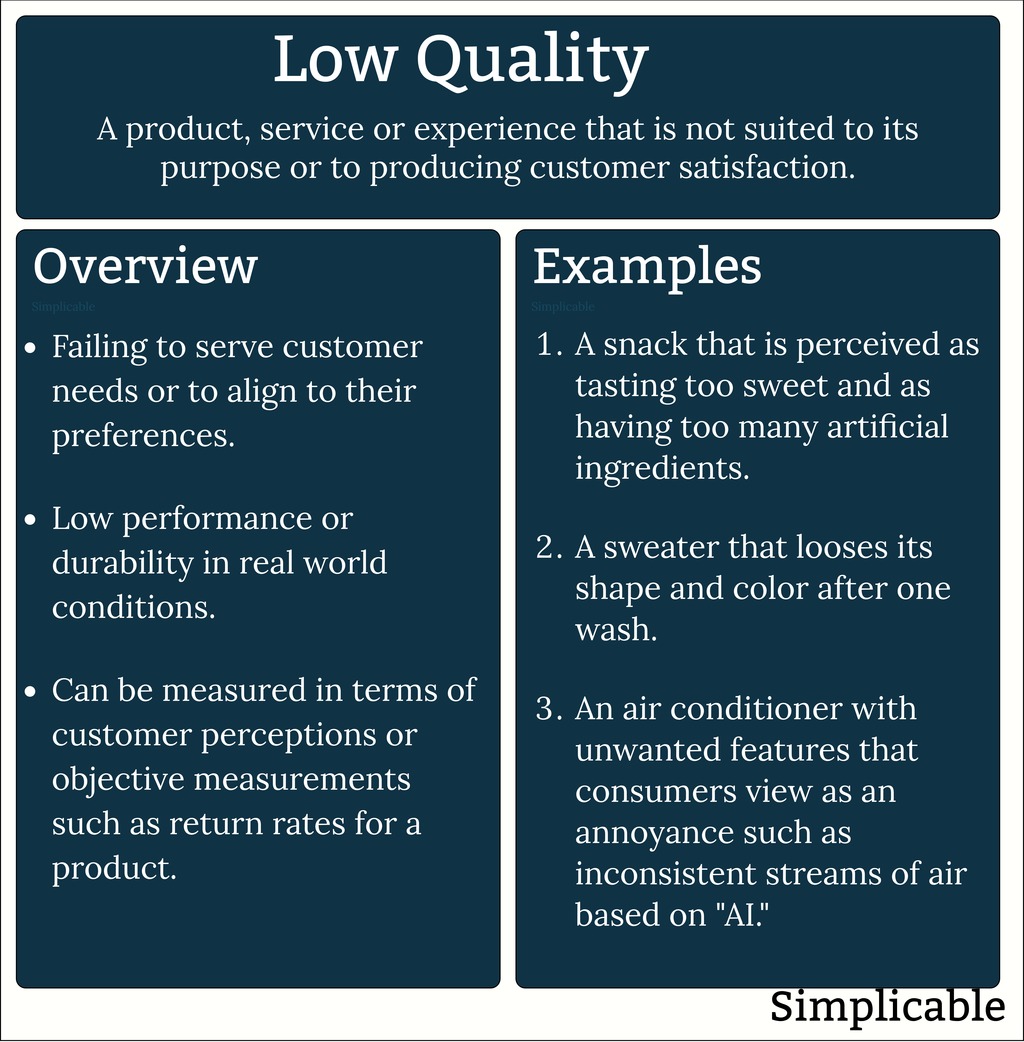











Definition of Low QualityA product, service or experience that is not suited to its purpose or not satisfactory to customers.
Low quality can be evaluated objectively by looking at things such as the downtime of a service or returns of a product. However, it is most truly measured with customer feedback. Customers have a lot of different ideas about quality based on their priorities, needs and perceptions. For example, one customer may find a strong "new car smell" to be delightful while another may be deeply concerned about what may be causing this smell. Just as customers have different perceptions of quality, they use products and services in different ways and to achieve different goals. A product that works well in one situation may completely fall apart in another. As such, these real world experiences with products and services often uncover quality failures.The following are a few examples of things that are typically perceived as low quality.Accuracy
Inaccurate product descriptionInaccurate manual or instructionsInaccurate product photosInaccurate color depictionsInaccurate serviceService staff say things that aren't true
Aesthetics
Poor look and feelLooks cheapUnappealing colorsUnappealing smellsUnappealing designPoor taste
Build Quality
Poor workmanshipManufacturing flawsMissing partsMisalignmentFlimsy SmellyDamagedMisprinted MispaintedComing apart
Conformance
Lacks standards complianceLacks specificationsNot quality controlledProducts or services that are different every time you buy.
Customer Experience
Late deliveryMakes unappealing sounds InconvenientFeels wrong
Design
Design flawsNot accessibleLatent human error e.g. allows users to make tragic mistakes
Durability
Breaks easilyBreaks when droppedDegrades quicklyNot water resistantNot weather resistantNot heat resistantEasily breaks with minor misuseLifespan is less than comparable products
Efficiency
Consumes too much powerConsumes too many resourcesRequires regular repurchases to use Requires excessive maintenance
Service Environment
UncomfortableClutteredUnstimulatingExcessive advertisingCliche interior designNoisy in a bad wayFeels unsafe Feels insecure e.g. flimsy door on hotel room
Fairness
Unfair termsComplex and incomprehensible termsComplex and incomprehensible billsComplex and incomprehensible policies Unfair return policiesSnobberyExclusionary policiesBiasesDishonest Unfair chargesInaccurate billingFailure to immediately correct billing errorsCorruptFailure to deliver to promises
Functions & Features
Lacks functionality or featuresExcessive features that get in the way of the user interface
Fit for Purpose
Poor fitPoorly designed relative to product's purpose.
Health & Safety
Dangerous productsUnhealthy products
Information
Inaccurate informationInaccurate instructionsUnclear expiry dateLack of support materialsLack of information e.g. no delivery date for order
Materials & Ingredients
Unhealthy ingredientsUnhealthy or unsafe materialsLow durability materialsSubstandard materials or ingredientsMaterials with low desirability e.g. a restaurant with plastic cups as opposed to glassware
Packaging
Difficult to openDifficult to repackageToo many stickers / tapeUninformativeFlimsyDamagedUnprofessionalLooks cheapPackaging smellsPackaging is dangerousVisually unappealing Unrelated advertising on packageNot reusableNot recyclable
Performance
Slow products and servicesUnavailable servicesUnstable servicesUnresponsive
Productivity
Products and services that reduce your productivity.Cumbersome interfacesHigh maintenanceLack of capabilitiesLack of configurationsLack of automationRequires too much inputOver-automation - a lack of user control
Reliability
Often downInconsistent performance
Security
Lack of physical securityLack of cybersecurityLack of data securityLack of secure authorization and authentication
Service
Unfriendly UnhelpfulSlowUnresponsiveLack of product knowledgeUnprofessionalLow professional standardsUnprofessional appearanceViolates normsIntrusiveAggressive sales tactics SecretiveDishonestDismissiveDisrespectfulFailure to meet commitmentsMistakesErrorsOverchargesFailure to correct mistakesCombative or hostileBiased
Useability
Difficult to learnDifficult to useDifficult to assembleLacks configuration optionsLacks flexibilityLacks interoperabilityDifficult to maintainDifficult to repair
Customer Expectations
Another excellent way to think about low quality is as a failure to meet customer expectations. If you are expecting a hat you ordered to be the brilliant royal blue you saw in a product photograph, you will likely view the hat as low quality if it is a more faded blue. For this reason, ample and accurate product descriptions and depictions can greatly improve overall customer perceptions of quality.Summary
Low quality is typically a mismatch between customer needs, preferences, perceptions and expectations and the realities of a product or service. For each type of product or service there are factors that are viewed as critical to quality. For example, freshness is critical to the quality of bread. Where these critical factors fall short, a product or service can be deemed low quality.