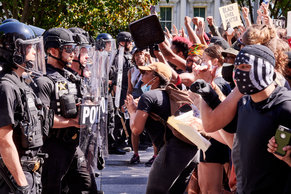
Peace is freedom from conflict, disturbance and discord. It is possible to have inner peace whereby you are not conflicted within yourself but rather feel a sense of tranquility, stability and calm. However, peace is mostly about the pursuit of harmony between people and groups such as nations. Disputes between people and groups is quite common such that peace requires ongoing diligence to preserve mutual respect and resolve disagreements with goodwill. The following are the key things to know about peace:
Peace is an absence of violence.
71 Votes
The primary characteristic of peace is that it an absence of violence or coercion. Conflict will occur between people and groups but peace handles this with communication.
Peace is based on positive relationships.
55 Votes
Harmony between people and groups isn't always possible as people will disagree and this can even be healthy to some degree. However, peace sustains a positive approach to each other even where you may disagree. For example, a family that calmly talks things out when there is an argument about something.
Peace is based on human rights.
49 Votes
Peace respects human dignity, rights and freedoms.
Peace is based on mutual respect.
48 Votes
Respect is recognition of the worth of yourself and others. This is the foundation of peace as it allows conflicts to be resolved in the spirit of understanding, trust and cooperation.
Peace is an active choice.
45 Votes
Peace isn't just something that happens. The nature of humanity is that we are continually propelled towards conflict. Peace requires much work and the light of our greatest strengths to achieve.
Peace requires justice.
42 Votes
Peace pursues justice and doesn't exist where an absence of conflict is enforced with oppression of some type. For example, a society couldn't achieve peace by putting everyone in jail to reduce open conflict.
Peace is not necessarily agreement.
41 Votes
People will disagree and this is a positive thing. If everyone was always thinking the same way, humanity would be a terrible bore. As such, peace isn't about everyone agreeing, it is about handling disagreements in a respectful and rational way that doesn't escalate into hostility.
Peace allows for disarmament.
40 Votes
Reducing and eliminating weapons, particularly those of mass destruction, is one of the primary benefits of peace whereby we can put less resources into destructive tools.
Peace depends on diplomacy.
35 Votes
Peace depends on conflict resolution mechanisms that allow individuals and groups to resolve disputes in a calm and reasonable way that prevents escalation into conflict.
Peace is based on acceptance.
30 Votes
Peace is based on tolerance of differences and not on forcing everyone to be the same. Acceptance is not about passivity or agreeing with everything but about allowing space for people to be different and to think differently.
Peace respects the rule of law.
22 Votes
The rule of law is the principle that all individuals and groups are to follow the law and are accountable to it. If a law is unfair, the political process is used to change it.
Peace respects the political process.
17 Votes
Politics is the process by which groups make shared decisions. For example, it is the process that defines laws. Peace requires cooperation across groups using the political process.
Peace benefits from forgiveness.
12 Votes
Bitterness about the past isn't conductive to peace. A process of letting go of anger, acceptance of the past, healing and rebuilding relationships is critical to peaceful coexistence.
Summary
Peace is a state of sustained civility and mutual respect between groups whereby conflict is managed with communication processes without violence or coercion.
4 Shares
Civility
This is the complete list of articles we have written about civility.
Cookies help us deliver our services. You have choices regarding these cookies. Please visit our privacy policy, cookie policy and consent tool to learn more.
Copyright 2002-2026 Simplicable. All rights reserved. This material may not be published, broadcast, rewritten, redistributed or translated. Report violations here.