








Literacy Skills
Foundational reading and writing skills. These include deep skills that are difficult to fully master such as essay writing whereby there is a big difference in writing talent from one person to the next. Literacy skills are also commonly expanded to include basic technology skills.
Communication Skills
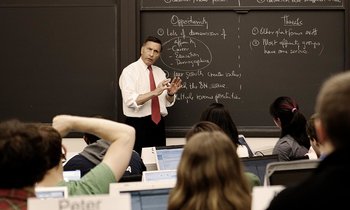
The ability to engage in academic communication such as class discussions, group work and debate. This includes areas such as argument, counterargument and rhetoric that are helpful for championing your ideas. Visual communication is also important to academic pursuits such as presentations, public speaking and reporting research findings.
Collaboration Skills
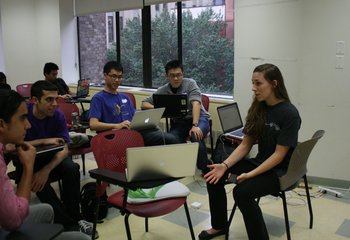
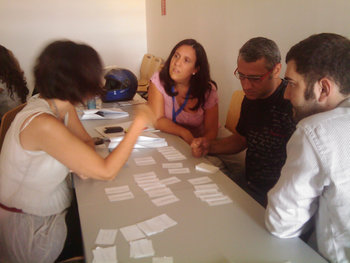
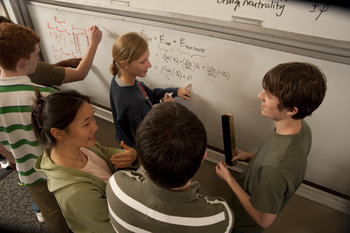
Interpersonal skills for tackling collaborative assignments and research projects. In many cases, the challenging part of group work is not the materials themselves but rather the process of building agreement on what to do and how to formulate outputs. Collaboration skills include the ability to take the lead or to otherwise work to add value to team efforts with techniques such as championing ideas, facilitation and constructive feedback.
Critical Thinking
Critical thinking isn't a single perspective or way of thinking but is rather a catch-all term for modes of thinking that are required in various academic contexts. For example, the ability to challenge assumptions, make connections and deduce new information from everything you know.
Self-Management Skills
The skills and character strengths required to be productive in the face of competing demands on your time and the temptation to procrastinate or indulge in distractions. This is based on the capacity to focus with self-discipline and is accelerated by the ability to plan, prioritize and build effective habits.
Study Skills
The capacity to learn, retain and apply new knowledge. This includes using different methods of learning from listening in class to teaching others in order to reinforce your own understanding.
Research Skills
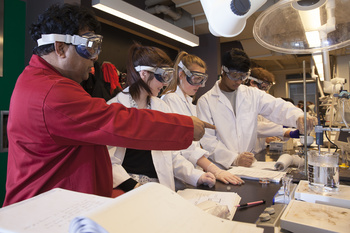
The ability to conduct valid research. This typically begins with descriptive research whereby you seek out the current state of knowledge regarding a research question. Research also includes a large number of qualitative and quantitative research methods such as case studies or scientific experiments.
Resume Skills for Students
Your experiences as a student may translate to skills that are critical to professional roles. For example, handling the pressure of an academic workload to meet deadlines and be prepared for tests translates to plenty of soft skills that are important to employers such as initiative, work ethic and commitment. Students also acquire important hard skills such as analysis, coding and digital literacy. The following are examples of skills that may be relevant to your resume as a student.Analysis | Assertiveness |
Attention to Detail | Coding & Scripting |
Collaboration | Communication |
Data Analysis | Design |
Digital Literacy | Diplomacy |
Engagement & Commitment | Feedback Incorporation |
Focus | Handling Challenges |
Handling Criticism | Handling Workloads |
Initiative | Listening |
Meeting Deadlines | Numeracy |
Preparation | Presentations |
Problem-solving | Punctuality |
Relationship Building | Research |
Resilience | Resourcefulness |
Responsibility | Self-Discipline |
Teamwork | Willingness to Learn |
Work Ethic | Written Communication |