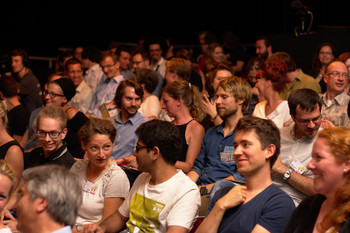
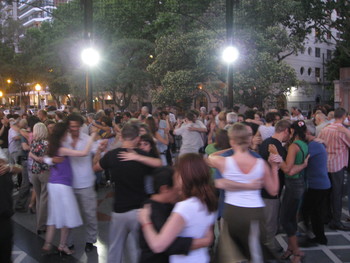
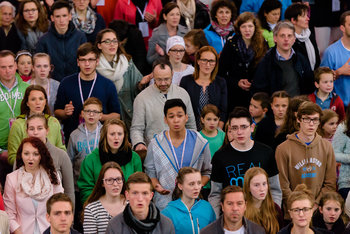
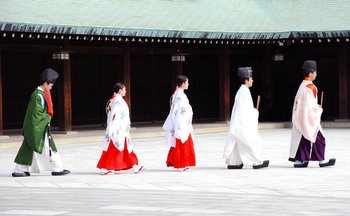
Cultural capital is the set of skills, knowledge, behaviors and habits that help a person to fit in, participate and succeed within a specific culture, group or social environment. This is not just about the upper class or high culture but is what helps you belong and thrive in any culture. The following are the key things to know about cultural capital:
Cultural Capital is Environment-Specific
Cultural capital is specific to a culture. For example, how to get along with neighbors in a posh neighborhood in Kyoto or how to get respect from other members of a hockey team.
Cultural Capital Helps People Fit In
Cultural capital gives people the tools to participate comfortably in a group. Fitting in often depends not just on what you know but how you communicate and what you signal. For example, knowing how to behave in a formal meeting.
Cultural Capital Can Be Exclusionary
While cultural capital can help people fit in, it can also be exclusionary, often in subtle, invisible ways that reinforce social boundaries and privilege. This can include unwritten rules about what counts as appropriate, professional or high status often favoring those who already come from dominant or privileged social backgrounds. For example, a student unfamiliar with academic language who expresses ideas in everyday terms may be perceived as less intelligent or serious.
Cultural Capital Can be Learned
You're not born with cultural capital but it can be quickly learned from institutions such as families and schools such that it transmits across generations within a social class from a young age.
Cultural Capital Influences Perceptions
People are judged based on how well they match cultural expectations. For example, having an accent or making minor language mistakes can cause others to underestimate a person’s professional abilities, giving native speakers an advantage in many workplaces.
Cultural Capital Rewards Conformance
Social environments and systems often reward those who conform to expected behaviors, knowledge and styles. Individuals who adopt or embody these expected traits gain social acceptance, opportunities and status, while those who deviate may face marginalization. For example, a team where everyone loves football where this is used to bond and communicate may put you at a disadvantage if you are unfamiliar or disinterested in football.
Cultural Capital is Hard to Fake
There is some depth of experience involved in cultural capital such that it's not easy to fake. If you're not a sailor you can't just read a book about sailing and suddenly fit in.
Cultural Capital Benefits Insiders
Cultural capital functions as a form of social advantage that primarily benefits those who already possess it — the insiders within a particular social, cultural or professional group. For example, university admissions where students from privileged backgrounds may be more familiar with the application process, including how to craft compelling personal statements and be impressive in interviews.
Cultural Capital Isn't Universal
What works in one culture may completely backfire in another. For example, direct speech is valued in some workplaces but seen as rude in others.
Cultural Capital is Mostly Unspoken
People are expected to just know what’s appropriate even if it’s never taught. Things that are communicated or documented may encompass nuances that transcend explanation. For example, a firm with a documented dress code but it's obvious if you aren't familiar with formal attire.
Cultural Capital Can be Developed
Cultural capital is quickly built up with immersion in a culture. For example, an immigrant who learns the local norms over time to the extent that they completely fit in amongst locals.
Cultural Capital is an Inherent Social Behavior
Cultural capital arises naturally in every culture and is the product of everyday socialization and interaction. Because cultural capital develops organically and unconsciously, it functions as an invisible social code rather than a grand plan to maintain power or privilege. Nevertheless, societies, systems and organizations can do things to reduce its impact. For example, developing objective evaluation methods for admissions to a school or for a promotion within a workplace.
Summary
Cultural capital refers to the knowledge, behaviors, communication styles, and skills that are recognized as valuable within a specific social or cultural setting. This includes things like how you speak, what you know, how you carry yourself and how familiar you are with certain norms, institutions or references. These qualities can help people access opportunities, build credibility and gain acceptance in particular environments such that they can represent a type of advantage or privilege.
4 Shares
Cultural Capital
This is the complete list of articles we have written about cultural capital.
John Spacey. "What is Cultural Capital? (12 Key Points)." Simplicable. Retrieved November 17, 2026. from https://simplicable.com/society/what-is-cultural-capital
Cookies help us deliver our services. You have choices regarding these cookies. Please visit our privacy policy, cookie policy and consent tool to learn more.
Copyright 2002-2026 Simplicable. All rights reserved. This material may not be published, broadcast, rewritten, redistributed or translated. Report violations here.