Politics is the process by which groups make shared decisions. This includes determining the strategy of the group, setting policy and allocating resources. Politics emerges within any large cooperative group such as a society, organization or team.
Politics Results From Cooperation
Politics occurs amongst large cooperative groups that make shared decisions. Smaller groups such as families are more likely to make shared decisions based on trust and long established roles.
Decision Making
Politics is the process by which groups make collective decisions. This includes foundational things such as laws passed by a government or strategies established by a firm.
Political System
Groups establish structures such as rules, roles and processes for politics. For example, a democracy with a process of voting for representatives or a firm that assigns authority based on role.
Political Culture
A political system is how the political process is supposed to work in theory. Political culture is how it works in practice. For example, voters in a democracy may organize into large political groups based on ideology. These groups may become bitterly entrenched whereby a nation becomes polarized along ideological lines.
Participation
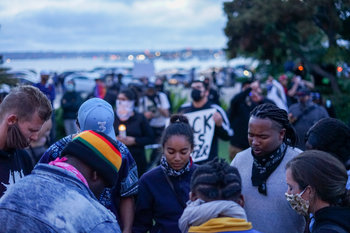
It is very common for a political system to call for universal or broad participation in the political process. This is particularly true in a democracy where people can participate with public debate, protest, voting and contacting elected representatives. Organizations also tend to involve many participants in decision making because this increases buy-in and reduces resistance to change.
Authority
Authority is the power and responsibility to make decisions within some predefined scope. With authority comes accountability. Political systems typically allocate authority in order to make decisions in a timely and efficient manner that is potentially rational.
Representation
Modern political systems typically allocate authority based on representation. For example, politicians represent the voters who put them in office and the board of directors of a firm represent major shareholders in the company.
Consensus Building
Even where authority for a decision ultimately resides with a person or group of people, there is often a process of consensus building that is used to generate and validate options. This rarely leads to actual group consensus in an individualistic society. However, it is common for collectivist cultures to actually achieve consensus. This tends to produce more conservative and less optimized decisions as compromises are required to achieve group harmony.
Influence
If you don't have authority or representation your main option is to try to influence authority or the opinions of the entire group. Many insiders within a society or organization get good at this to the extent that they have an unofficial type of power. Protest movements are also a means to influence. Likewise, media and participation in media can influence.
Corruption
Corruption is when an entity exercises undue influence over authority. For example, a democracy that is supposed to solely controlled by the people that is actually greatly influenced by elites and corporations.
Political Conflict
Politics can result in the allocation of power, authority, status and resources such as money. It also can cover questions of fairness and what we value as a society. This creates an intensive environment where some level of social conflict is more the norm than the exception. This is healthy as long as it remains within the bounds of civility. Any group that agrees on everything is surely suffering from mediocrity and stagnation.
Rights & Freedoms
Rights and freedoms are limits to the power of an authority. This is important in a democracy where the major rules and this majority could become a tyranny towards anyone outside of this majority. Rights and freedoms must constantly be defended as authority structures will tend to try to extend their power.
Diplomacy & Negotiation
The term politics applies to cooperative groups such as a society. Relations and cooperation between separate entities are described with other terms such as diplomacy and negotiation.
Summary
Politics is the de facto process by which groups make shared decisions. This includes a political system that provides official structures for decision making and political culture that represents the real world complexities of how decisions are actually made.
Cookies help us deliver our services. You have choices regarding these cookies. Please visit our privacy policy, cookie policy and consent tool to learn more.
Copyright 2002-2026 Simplicable. All rights reserved. This material may not be published, broadcast, rewritten, redistributed or translated. Report violations here.