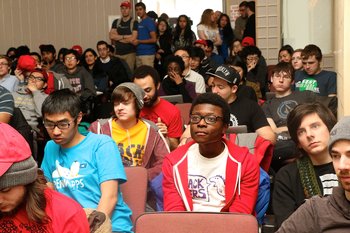
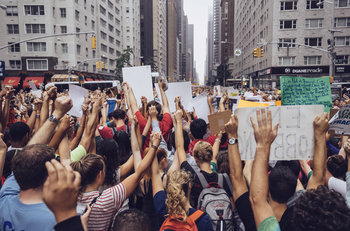
Sociology is the study of society and human social behavior. This can be based on both critical analysis and empirical study such that it is viewed as one of the social sciences.
Society
Sociology is first and foremost the study of societies -- the systems that organize life in a place. Modern societies are often nation-states but can include multinational societies and global structures such as political and economic unions or indigenous nations within another country.
Social Structures
Social structures are the durable elements of society and the relationships between them. This includes institutions such as government and families that provide stability to society.
Social Roles
A social role is a set of responsibilities or expectations that an individual adopts in a society. This can include things like family roles such as parent, relationship roles such as friend and professional roles such as teacher.
Social Environment
The social environment are all the social things that surround an individual and shape their behavior and thinking. This includes language, institutions, values, norms and culture.
Social Power
Social power is the ability of individuals and groups to direct and influence society and others within that society. This includes authority rooted in coercive power and reward power as well as soft types of power such as influence and expert knowledge.
Human Ecology
The influence of natural and built environments over society and social behavior. This includes stresses such as disasters and environmental issues as well as change such as urbanization and migration.
Socialization
Socialization is the the process by which individuals learn to interact with others and to navigate social situations and relationships. This includes awareness or internalization of norms and values.
Social Behavior
The complexity of human social behavior including the nuances of language and other types of communication. Sociology looks at different modes of behavior such as cooperation, competition and conflict.
Social Life
Social interactions, relationships and the formation and behavior of social groups. This can include family life, community life, friendship, courtship and working life.
Social Identity
The way that people define themselves and view themselves in relation to the rest of society. This includes membership in social groups by factors such as nationality, ethnicity, gender, religion, social class, culture and profession.
Social Stratification
The tendency for hierarchical structures to form in society based on social and economic factors such as wealth, income, ethnicity, level of education and profession. This includes major socioeconomic classes such as the upper, middle and working class.
Social Norms
The informal rules and expectations of behavior that emerge in a society, social group or culture. Sociology looks at how norms form, their influence on behavior, norm violations and enforcement.
Social Inequality
The unequal distribution of resources, opportunities and social status within a society. Sociology looks at the causes and effects of inequality as well as questions of distributive justice which is the fairness of resource distribution within a society.
Social Issues
The problems, obstacles, adversity, challenges and risks facing individuals and groups within a society. Social issues include economic, political, environmental and community issues that impact quality of life.
Social Change
Change to society driven by factors such as technological disruption, shifting lifestyles and changing values.
Global Perspective
Societies differ greatly from one nation to the next and it is common for sociology to be somewhat focused on American or Western society. Efforts are also made to look at other societies and to describe patterns across all societies. Likewise, sociology looks at global social structures and norms that are emerging due to globalization.
Contemporary Issues
Social issues and opportunities created by social change. Contemporary issues in sociology include areas such as media, technological lifestyles, shifting social structures, economic disruption and emerging values and norms.
Summary
Sociology is the study of society and social behavior. This includes elements such as governments, institutions, social power, roles, norms and identity. Sociology overlaps with numerous other academic disciplines and is central to understanding social organization and behavior.
Cookies help us deliver our services. You have choices regarding these cookies. Please visit our privacy policy, cookie policy and consent tool to learn more.
Copyright 2002-2026 Simplicable. All rights reserved. This material may not be published, broadcast, rewritten, redistributed or translated. Report violations here.