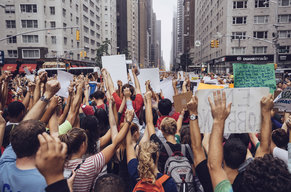
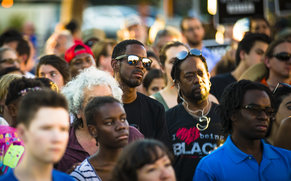
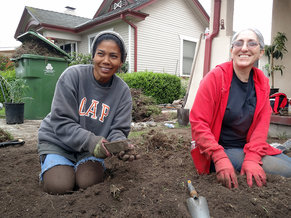
Social beliefs are views and understanding concerning society, community, relationships and social interactions. These capture what you hold to be important and fair regarding people and social institutions such as nations, families or schools. Social beliefs are held by individuals, cultures and groups and greatly shape the human experience. The following are common social beliefs.
Political Beliefs
Views on how government should be run and social issues addressed. This includes political ideologies such as conservative, liberal and progressive. Political beliefs also include more foundational principles such as democracy, political equality and solidarity.
Beliefs that are transmitted by traditional culture such as a national culture or a contemporary culture such as youth culture. This includes beliefs that are spread from generation to generation and from person to person. Cultural beliefs are also transmitted by media such as music, film and social media.
Values & Principles
Social values are what you deem to be important to society and social principles are rules for organizing society. For example, the principle of major rule and minority rights that is the basis for democracies that implement the will of the majority with constraints set out in law such as a national constitution that protect minorities from tyranny at the hands of the majority.
Economic Beliefs
Beliefs regarding how the economy should be structured and administered. For example, belief in free markets with minimal interference from government or belief in regulations such as consumer, environmental and worker protections that reduce the negative impacts of industries.
Interpersonal Beliefs
Beliefs concerning relationships and social interactions. For example, cultures that embrace emotional honesty or emotional restrain. Interpersonal beliefs can also include structures such as families or social roles that provide a means to organize into social groups that offer extensive support and bonding.
Educational Beliefs
Beliefs concerning the academic process including learning and research. This can involve broad social issues such as public funding for schools, access to education and student debt. Educational beliefs can also encompass educational approaches such as learning the fundamentals versus learning practical skills for the workforce.
Philosophical Beliefs
Philosophical beliefs related to society including moral principles and approaches for doing good for others. For example, peacebuilding that involves building connections and understanding between groups that are at risk of future conflict.
Impact of Social Beliefs
Over the long term, social beliefs shape every aspect of life in a society including government, education, culture, communities and social institutions. As such, it is difficult to overstate its impact. For instance, the postmodern belief known as relativism whereby subjective experience is viewed as the only true reality such that universal knowledge such as facts are meaningless, would be likely to change society in profound ways if it were to become a dominant social belief. Under relativism, things like science, knowledge and debate are meaningless as individuals are free to define reality and demand that this reality be recognized by society. This would be quite a remarkable paradigm shift in society that would have impacts on economic production, quality of life and education.
Change to Social Beliefs
Change to social beliefs causes political friction. For example, a society that transitions from a religious/traditional to a scientific/progressive orientation would be likely to see intensive political divisions and polarization.
Personal Beliefs vs Group Beliefs
Where your personal social beliefs differ markedly from those of your society, community or family this may cause a sense of alienation and disconnection from these institutions. For example, an individualist living within an intensely collectivist society may experience stress as the systems and cultures in which they live conflict with their social beliefs. In the modern age, people often have access to diverse subcultures that allow people to immerse themselves in social environments that are more aligned to their social beliefs.Next read: Social Attitudes
27 Shares
Society
This is the complete list of articles we have written about society.
Cookies help us deliver our services. You have choices regarding these cookies. Please visit our privacy policy, cookie policy and consent tool to learn more.
Copyright 2002-2026 Simplicable. All rights reserved. This material may not be published, broadcast, rewritten, redistributed or translated. Report violations here.