Automation is work that is done by computers or machines with minimal human input. This can be contrasted with manual or high touch work that is mostly based on human labor. Automation has several key characteristics:
Computer Automation
Doing work with computing technology. This can resemble the cognitive work of a person such as making a decision or solving a problem.
Physical Automation
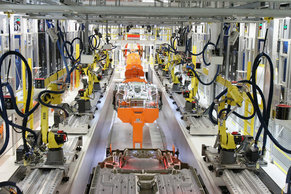
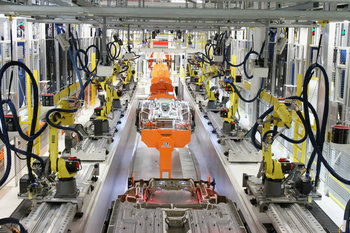
Doing physical tasks with machines. This is also typically based on computing technology but includes a physical process. For example, a production line that automatically sorts apples by size.
Process Automation
Automation can complete a task such as backing up a file. It can also orchestrate an entire process that is essentially a series of tasks that can include complexities such as parallel tasks that can occur at the same time.
Process Control
The process of continually monitoring and adapting a process to keep it within defined parameters. For example, a chemical manufacturing system that controls things like pressure and temperature in a machine.
Workflow
Workflow is a process that is automated but that also contains human steps. For example, processing a mortgage application that automatically scores the application but includes human steps related to know your customer whereby a representative must have a meeting with the customer.
Toil
Toil is work that people find repetitive, difficult and unsatisfying. For example, sorting apples by size might be alright for 30 seconds but it's not something you'd want to do for 30 years. Automation can often free humans from toil.
Repetition
Traditionally, automation was best suited to tasks that are highly repetitive because this justifies the expense of developing the automation. If a company sorts 3 apples per day, it might not be worth automating but if they sort 3 million apples a day, automation would really pay off.
Efficiency
When a machine or computer is good at a task, it is usually far faster and less expensive than human labor.
Accuracy
Automation can be very accurate. For example, an automated accounting system that isn't going to make a mistake when it calculates your daily revenue for a report.
Reliability
Systems can have high reliability such as 99.99% uptime. They don't take holidays, quit or call in sick.
Continuous Operation
Automation can often work 24/7 without regard to weekends or holidays.
Scalability
Systems can be designed to be highly scalable meaning that you can increase their workload by adding more resources. For example, a production line designed to support unlimited apple sorting machines.
Error Rate
Systems can improve error rates as compared to manual processing. For example, an IT company that automatically generates 5.6 million monthly invoices without a single error.
Data Processing
Automation can perform data processing such as using millions of transaction records to calculate metrics for a weekly sales report.
Algorithms
An algorithm is series of steps for solving a problem. This term is typically applied to relatively advanced code such as efficiently searching or sorting a very large set of data.
Business Rules
Business rules are logic that can be used to automatically implement processes, policies and controls. For example, a rule that a customer's loyalty card must be valid in order to claim a discount.
Decision Making
Systems can use things like business rules and algorithms to make decisions. They can also use artificial intelligence.
Artificial Intelligence
Artificial intelligence is the ability of machines to be logical in an adaptive and flexible way to do more than just execute predefined rules and algorithms. For example, a security system that automatically looks for patterns in realtime camera data.
Human-Machine Collaboration
Tools that automate the heavy lifting for a person but a person is still directing things or at least contributing. For example, an app that allows you to design a house that automatically makes the design structurally valid and up to code.
Visibility & Explainability
Visibility and explainability are important properties of an automation, particularly AI, whereby people know what is going on with the AI and how it is arriving at its decisions and solutions.
Automation Ethics
Humans remain responsible and accountable for any automation, including AI, that they put in place. In other words, accountability can not be placed on a system but always falls to the person in charge.
Summary
Automation is the practice of doing work with computers and machines. This has many variations including data processing, process automation, physical automation and advanced automation based on AI that is adaptive and flexible but perhaps less predictable and explainable.
Cookies help us deliver our services. You have choices regarding these cookies. Please visit our privacy policy, cookie policy and consent tool to learn more.
Copyright 2002-2026 Simplicable. All rights reserved. This material may not be published, broadcast, rewritten, redistributed or translated. Report violations here.