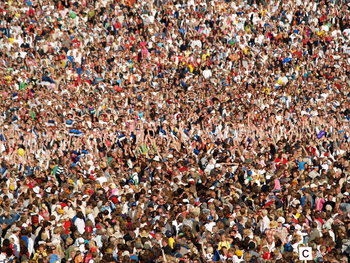
Social status is the perceived social position of an individual in a particular social context. Examples include youth, physical appearance, physical prowess, intelligence, accomplishments, awards, coolness, respectability, profession, authority, wealth, fame and popularity. Social status greatly influences how an individual may be received and treated by others.
Status As a Human Need
People tend to want or need social status and are highly motivated to achieve it. This pursuit of status can explain a wide range of human behaviors. For example, working to be stylish or to have a remarkable lifestyle that others might envy.
Ascribed Status
Ascribed status are elements of your social status that you did nothing to achieve such as your nationality, height, family connections or inherited wealth.
Achieved Status
Achieved status are elements of your status that you worked to build up such as your education, profession or self-earned wealth.
Connections to Status
People tend to view connections to status as increasing your status. For example, if you went to a top university, worked for a prestigious firm or are friends with a famous person -- their status partially transfers to you. This explains a practice known as name dropping whereby people mention the high status people they know.
Status as Symbolism
Symbols of social status are a popular way to try to improve one's status. For example, an expensive handbag or car that signals that you have some level of wealth or income. This has lead to entire industries based on building up high status brands so that you can essentially sell social status as a commodity.
Social Perception of Status
People naturally perceive status whereby the mind appears to almost rank people or categorize them as high or low status. Perhaps this type of thinking can be overcome but is quite common.
Status as Respect
The human want or need of social status can be described as a need for respect. The people we know well may respect us for who we are as a person. However, people also desire respect from people they don't know very well or even strangers. This is embedded deep in social behavior and can be difficult to overcome.
Status is Situational
Social status is highly situational. For example, people define subcultures that have their own rules of social status. In many cases, these cultures will completely reverse what the mainstream views as status. It is also common for subcultures to base status on how well your exemplify the spirit of the culture.
Status is Relative
Social status is relative to others in a particular social group and the social environment. For example, you might be the wealthiest person on your street but when you attend an international conference you might just be mediocre on this count.
Social Power
Social status is a type of social power whereby you may more easily influence people, make friends and be awarded privileges when you are high status. This isn't necessarily fair and society has made progress in being more fair but this is very much a persistent feature of the real world.
Normative Expectations
Your perceived social status can also place pressures on you to behave or live your life in a particular way. For example, upper class families who feel they are under pressure to get their children into high status schools.
Summary
Social status is the perceived position of an individual within a social group. This is based on perceived strengths that grant an individual social power. This is all a catch-22 whereby people tend to give you more social power when they perceive that you already have social power.
John Spacey. "What is Social Status? (11 Key Points)." Simplicable. Retrieved November 17, 2026. from https://simplicable.com/society/what-is-social-status
Cookies help us deliver our services. You have choices regarding these cookies. Please visit our privacy policy, cookie policy and consent tool to learn more.
Copyright 2002-2026 Simplicable. All rights reserved. This material may not be published, broadcast, rewritten, redistributed or translated. Report violations here.