A step cost is an additional investment that is required to increase the production of products or the capacity of a service. Fixed costs such as the cost of a factory or data center typically remain static as you increase your business volumes. This results in economies of scale as the cost of a factory can be spread over more units as you produce more. A step cost occurs when property, plant or equipment approaches capacity and upgrades are required. This results in a jump in unit cost at discrete points as you reach various capacity limits.
Additional investments that are required to support business volumes as you approach capacity limits.
Example
A bank's data center reaches its power limitations and can't handle any more equipment. The bank decides to install solar panels and replace aging computing equipment with more power efficient models, resulting in step costs to support business volumes.
Fixed vs Variable
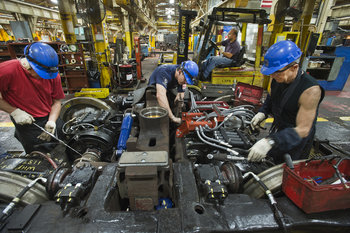
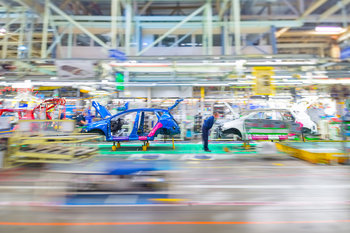
In many cases, a step cost is a fixed cost such as an investment in equipment. However, a step cost can also result from a significant new investment in variable costs such as parts and labor. For example, a factory may need to add a new shift to increase capacity with a minimum of 20 employees per shift. The costs associated with hiring the 20 new employees represent a step cost to increase production past a certain point.
Cookies help us deliver our services. You have choices regarding these cookies. Please visit our privacy policy, cookie policy and consent tool to learn more.
Copyright 2002-2026 Simplicable. All rights reserved. This material may not be published, broadcast, rewritten, redistributed or translated. Report violations here.