
















Definition of Business StrategyA plan to achieve business objectives in an environment of change, constraints and competition.
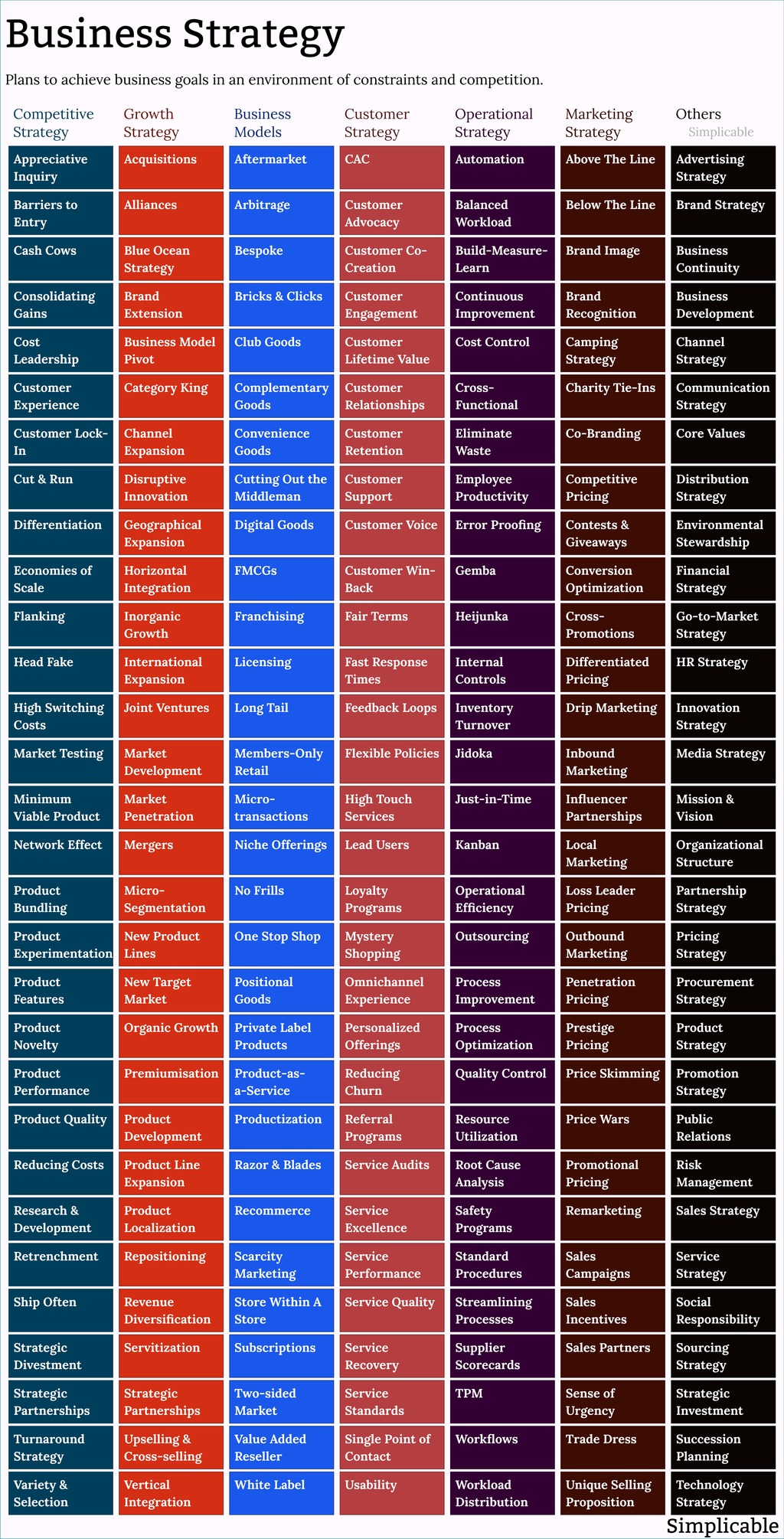
Strategies include overarching grand strategies that are typically about building out competitive advantages and growing your business. These are then decomposed into an ongoing stream of specific strategies in areas such as research, brand, product, pricing, promotion, distribution, operations and customer experience. The following are common business strategies.
Competitive Strategy
Your grand strategy for building and sustaining an economic moat. This is about developing and defending competitive advantages. However, in practice many firms are simply trying to survive against stronger competitors and may seek competitive parity in many areas. In other words, strategy isn't always about leading -- it can also be about catching up.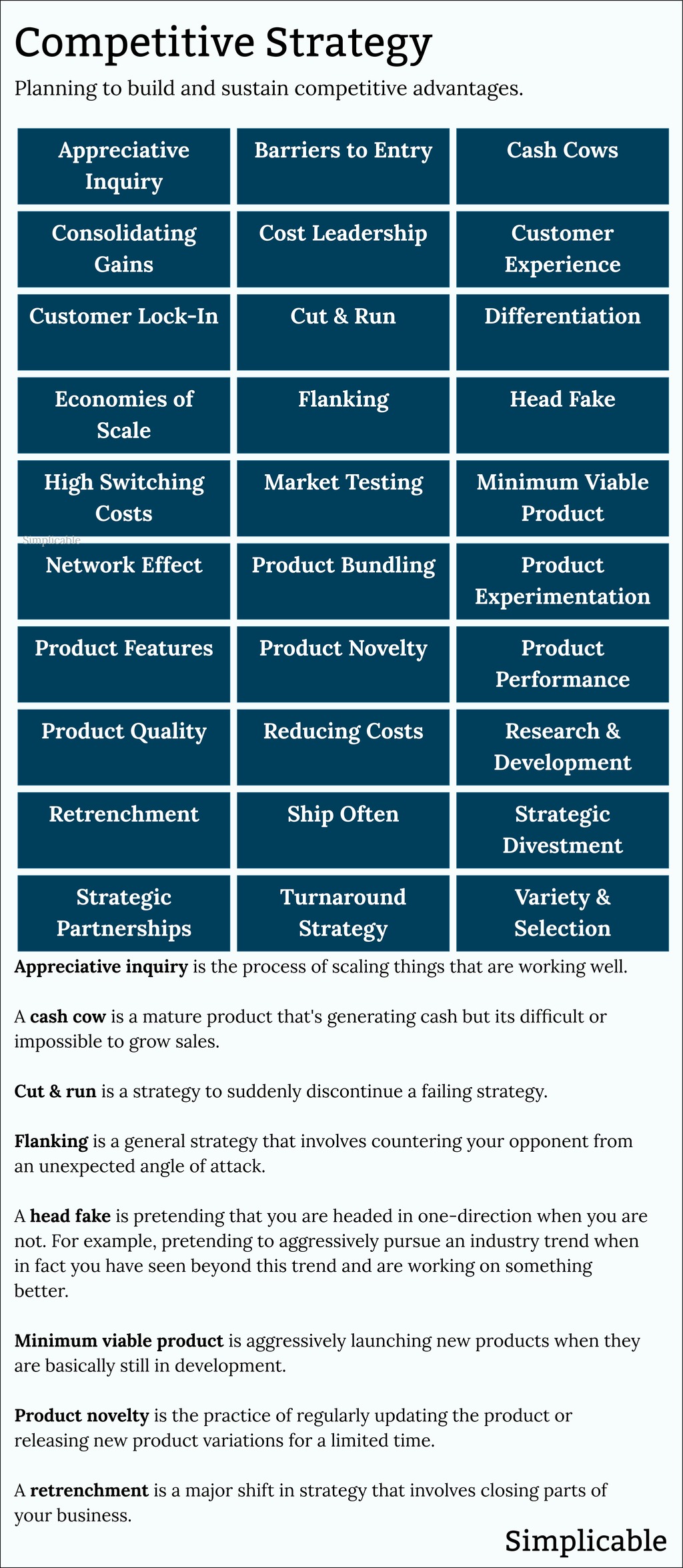
Growth Strategy
A plan to grow top-line and bottom-line revenue. In some cases, a business is only growing top-line revenue and isn't yet profitable. This requires validation that the business model is sustainable because anyone can spend money to make money but the trick is achieving profitability at some scale. In other cases, a business grows only bottom-line revenue by cutting costs. This can be indicative of a business that is not investing in the future whereby revenue may decline over time.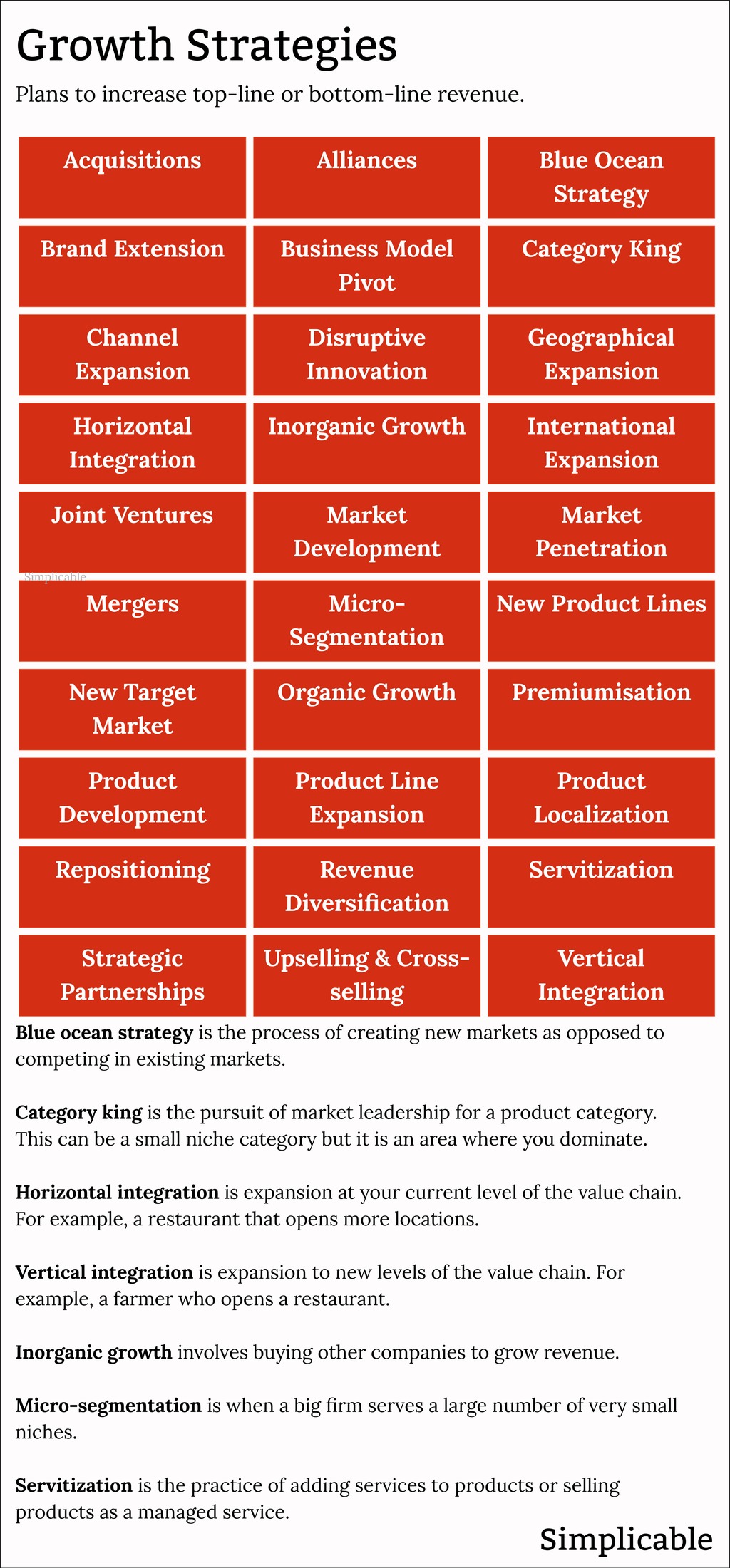
Business Models
A business model is how you create value and capture some of that value as revenue. This doesn't change all that much as most industries are based on a handful of business models that are seldom innovated. However, when a new business model does come along that shifts an industry the transition to the new model may become a focus of strategy for many years.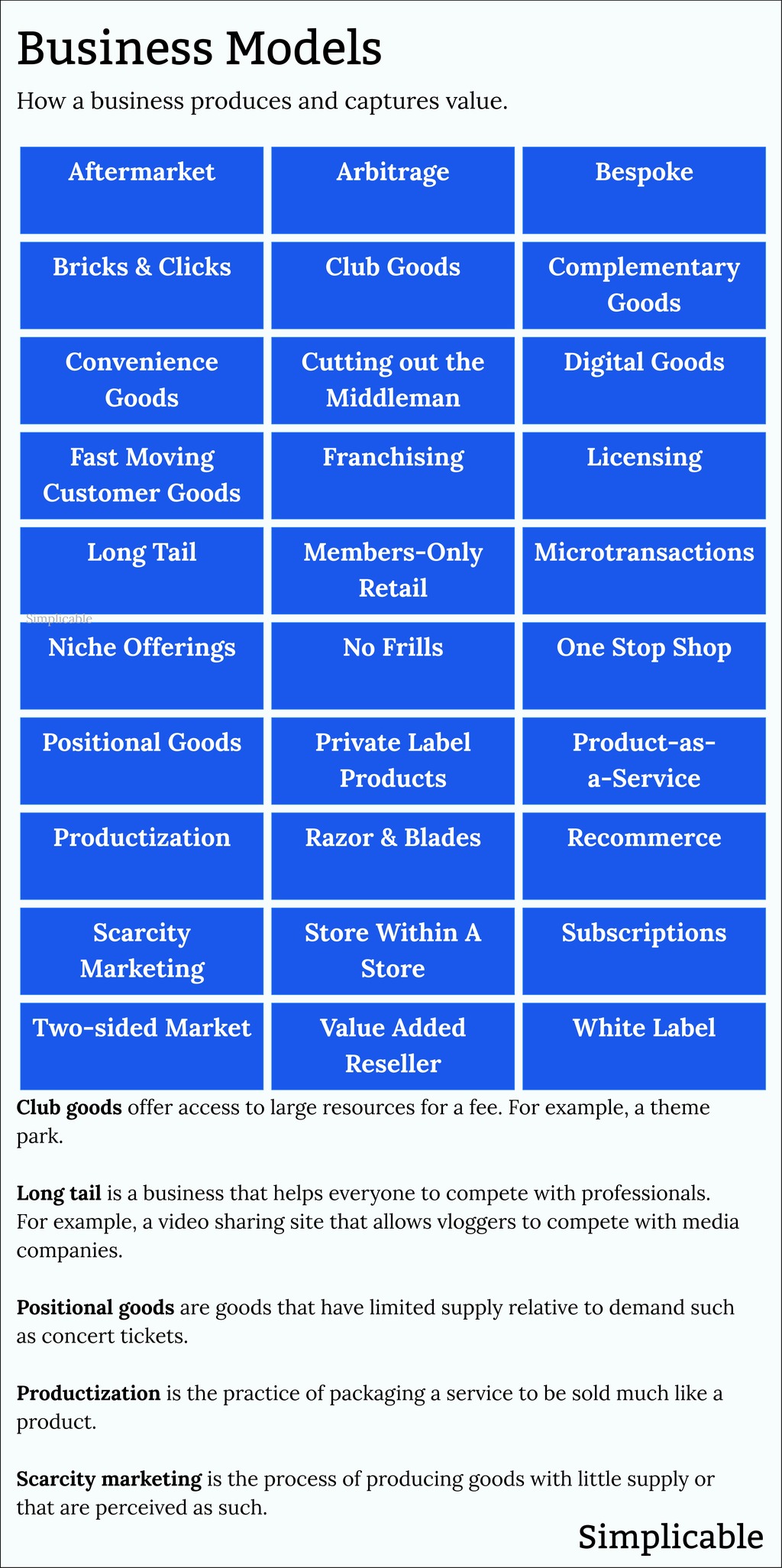
Customer Strategy
Plans to improve the customer experience. This is important in the internet age when customers commonly share their experiences with a brand whereby good experiences naturally attract customers and bad experiences repel them. For example, a smartphone may naturally dominate its market by offering amazing usability whereby competing products simply aren't as enjoyable to use.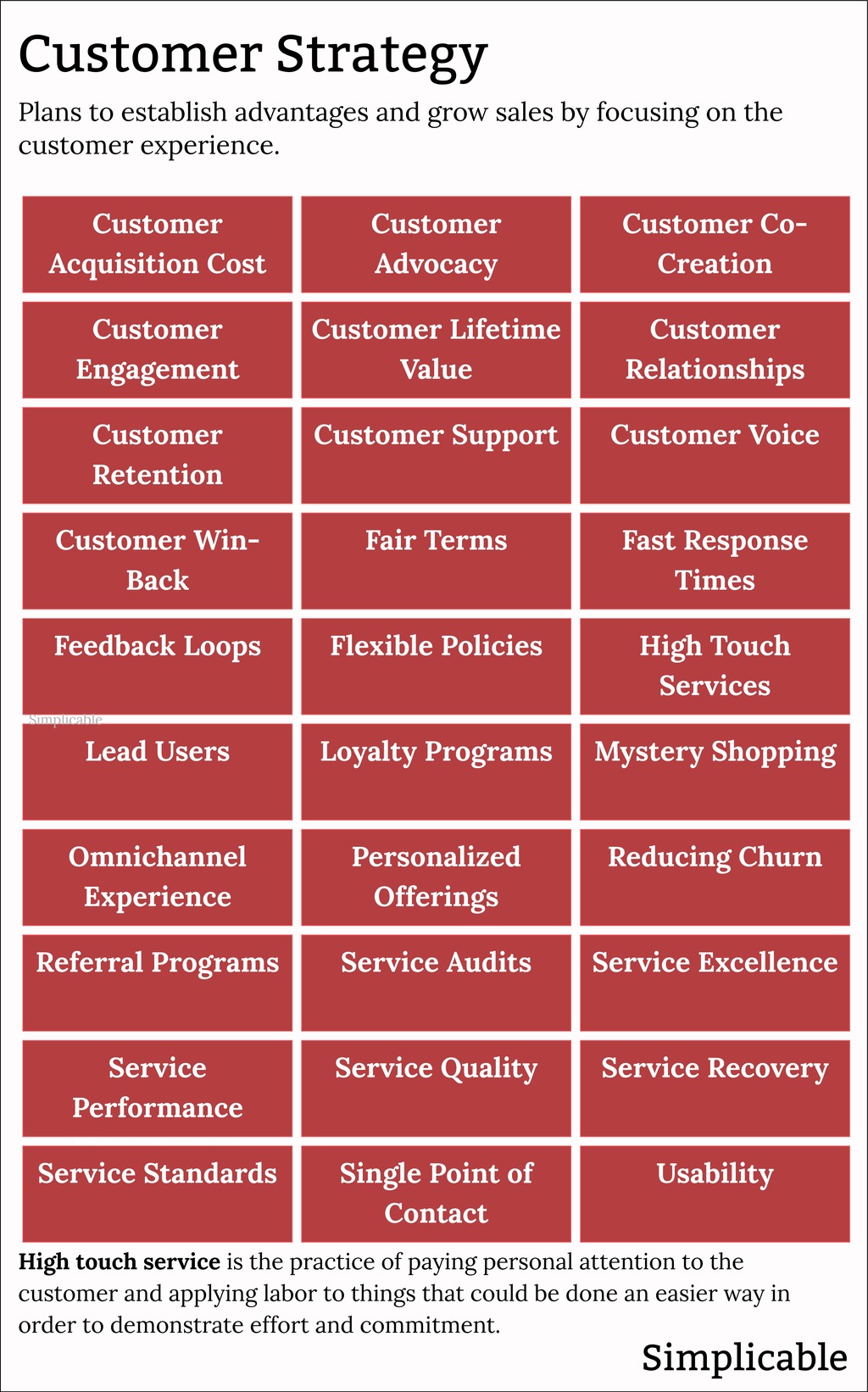
Operational Strategies
Plans to improve your core value generating processes. These differ by industry but are the processes that produce your products and services. Operational strategy is mostly about efficiency, cost and quality. Modern operations is heavily influenced by methods developed in Japan in the 1980s when the nation was absolutely obsessed with quality improvement. Many of these are explained in the list below.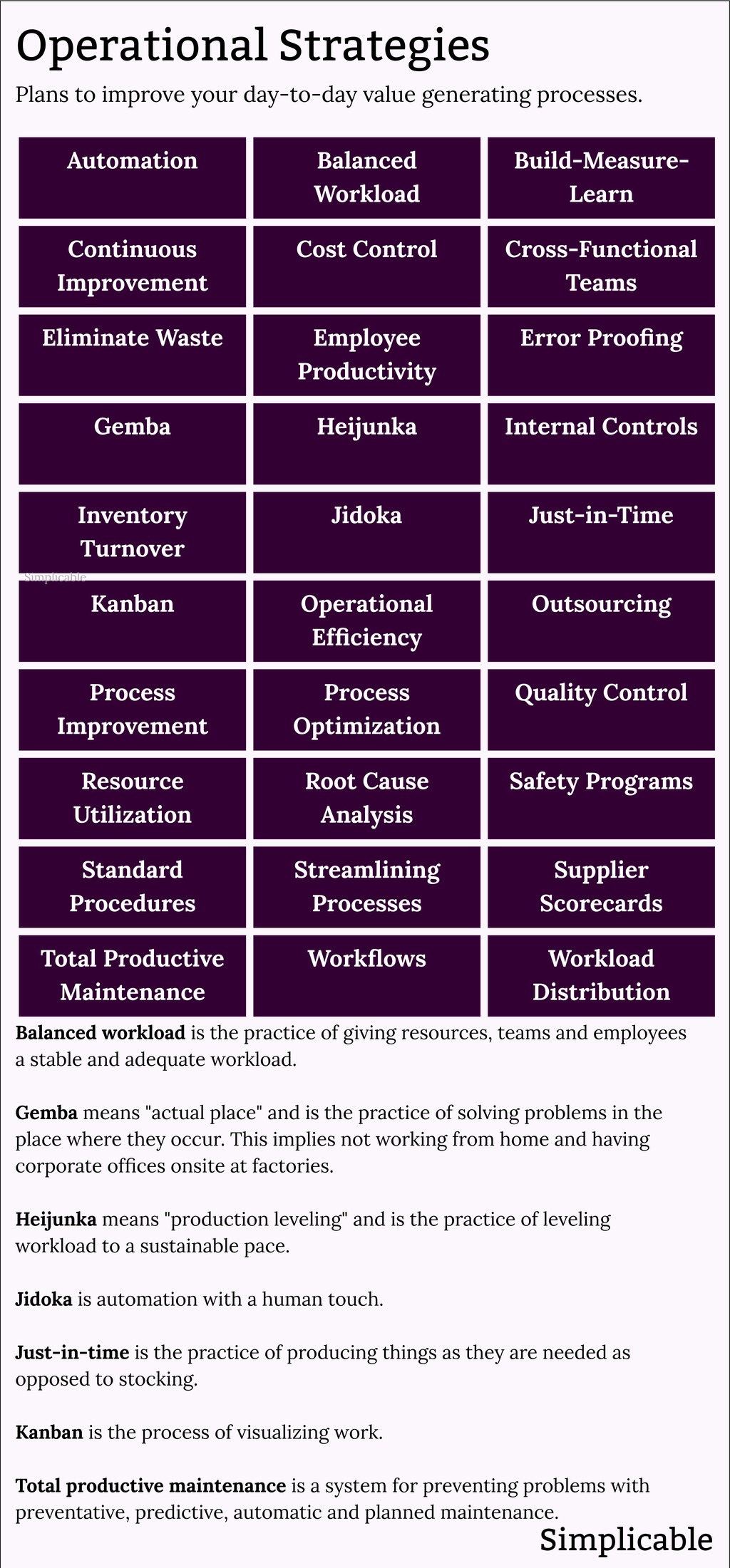
Marketing Strategies
Marketing strategy concerns what you are offering the customer and how they perceive these offers. This has several distinct areas including brand strategy, product strategy, promotional strategy, product strategy, pricing and distribution.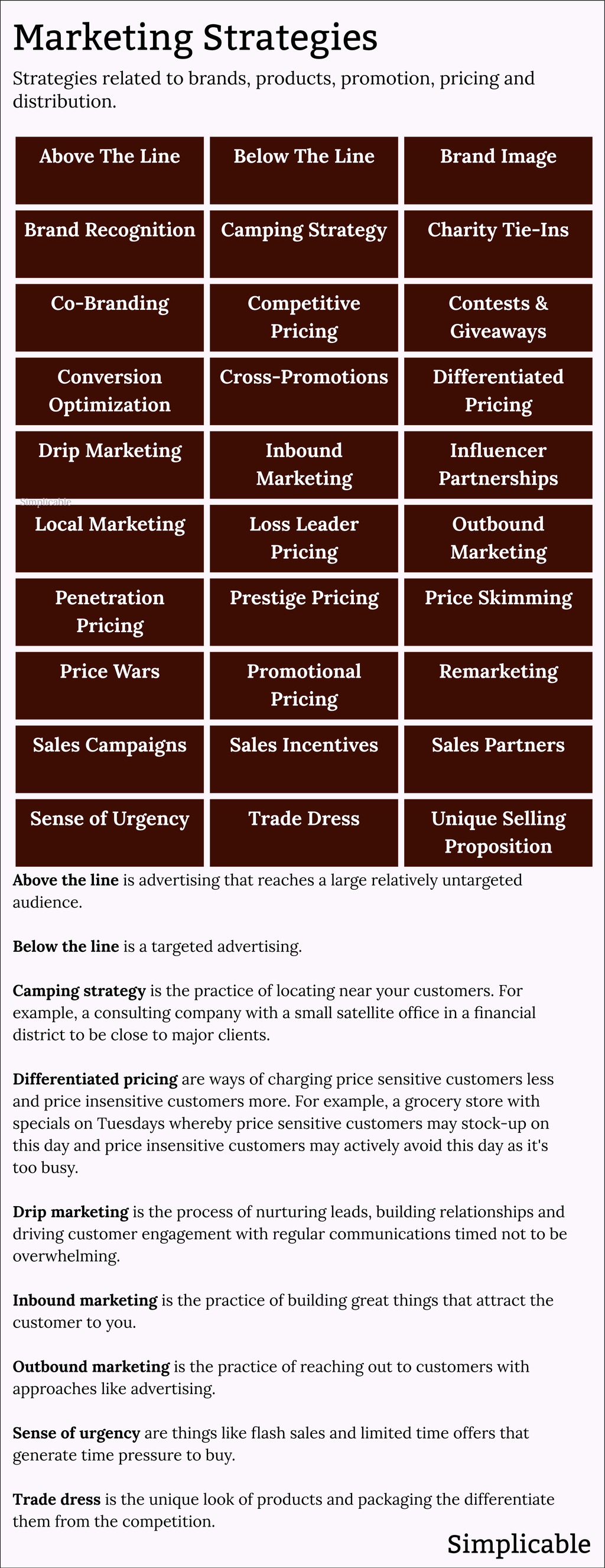
Others
Other areas of business strategy beyond those above. This includes specialized areas such as risk management, quality and business continuity planning. This also includes overarching grand strategies related to things like your mission, vision and organizational structure.