






Verbal Communication
Verbal communication is the use of words. At the social level, words aren't just words but are commonly used to read things like intent, politeness, humor, emotion and social status whereby people collect information that isn't technically within your words themselves. This is shaped by things such as your relationship with others and your position in a group. For example, if people know and trust you they may receive your words well even if you slip up and say something that could be interpreted as impolite or confusing.Articulating ideas | Asking good questions |
Changing the topic well | Conversational transitions |
Conversational turn-taking | Crafting persuasive arguments |
Critical listening | Debate |
Deep listening | Diffusing conflict |
Diplomacy | Empathetic listening |
Engaged listening | Explaining complex ideas |
Expressing gratitude | Facilitating discussions |
Giving clear directions | Giving compliments |
Giving feedback | Giving presentations |
Interjecting politely | Language adaptability |
Leading discussions | Making suggestions |
Managing conflicts | Not interrupting |
Paraphrasing | Persuasion |
Public speaking | Reassuring others |
Reflective listening | Second languages |
Small talk | Story structure |
Storytelling | Tailoring communication to audience |
Tone of voice | Using humor |
Non-verbal Communication
Non-verbal communication includes body language, facial expressions, voice and other elements such as use of space or even your fashion. Again, people are quite complex and will read cues from these things so you can communicate much without words or beyond words.Body language and posture | Conveying authority subtly |
Conveying confidence with body language | Conveying disinterest |
Exhibiting warmth and approachability | Expressing emotion non-verbally |
Eye contact | Facial expressions |
Fashion sense and clothing choice | Grooming |
Managing and controlling nervous habits | Managing non-verbal aggression |
Mirroring | Personal space |
Projecting openness | Reading body language |
Reading facial expressions | Recognizing emotions through body language |
Responding to non-verbal cues | Showing agreement |
Showing that you're listening | Using gestures |
Using non-verbal cues to regulate conversation flow | Using silence effectively |
Using touch appropriately |
Interpersonal Communication
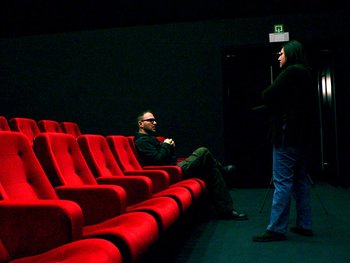
Interpersonal communication is simply the back-and-forth interaction between people where we share ideas, emotions and reactions. This includes various modes of interaction such as collaborating, apologizing or small talk with a stranger. Interpersonal communication can be viewed as a collection of high level skills that leverage the communication skills above but also require expressive talent, awareness of others and self control. For example, being able to bounce back from disappointment and still build towards something positive when interacting with someone.Accepting compliments gracefully | Accepting differences |
Accepting feedback | Acknowledging mistakes |
Asking meaningful questions | Balancing speaking and listening |
Being approachable | Being consistent |
Being non-judgmental | Being open-minded |
Being patient | Being understanding |
Compassion | Complimenting others |
Conflict handling | Conveying intentions |
Demonstrating interest | Demonstrating respect |
Discretion | Emotional adaptability |
Emotional maturity | Emotional risk-taking |
Emotional self-regulation | Establishing common ground |
Establishing trust | Handling criticism |
Honest sharing | Including others |
Introducing others | Introducing yourself |
Issue resolution | Maintaining composure |
Making apologies | Making conversation |
Managing disappointment | Managing expectations |
Offering opinions | Offering support |
Peacekeeping | Rapport building |
Reframing negativity | Resolving misunderstandings |
Self-awareness | Self-disclosure |
Setting expectations | Sharing stories |
Showing appreciation | Social awareness |
Striking up a conversation | Understanding different perspectives |
Group Communication
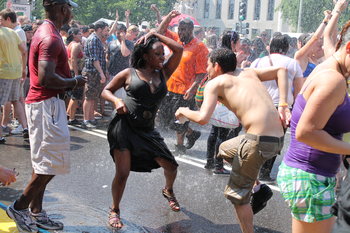
Group communication is the flow of ideas and interaction within a group where every person has a role in shaping the conversation. This again, isn't a mere exchange of words and information but is about how everyone connects, reacts and responds to each other. Group communication can also be viewed as a collection of high level skills whereby you can establish a presence within a group, build relationships, find common ground, solve problems or simply enjoy interacting.Accounting for cultural differences | Asking thoughtful questions |
Avoiding assumptions | Avoiding excessive self-promotion |
Avoiding oversharing | Being approachable |
Being decisive | Being mindful of sensitive topics |
Being positive | Being yourself in a group |
Building consensus | Building emotional connections |
Building on the ideas of others | Building others up |
Calling others out | Collaboration |
Cooperation | Defusing negativity |
Detecting misunderstandings | Disagreeing respectfully |
Facilitating | Giving credit |
Giving space to others | Helping others recover from missteps |
Including others | Influencing others |
Knowing when to hold back | Leading |
Maintaining emotional control | Maintaining focus in group discussions |
Maintaining respect for privacy | Making good points |
Making others feel heard | Moving past egos |
Navigating disagreements | Navigating group conflict |
Navigating group dynamics | Not dominating the conversation |
Not interrupting others | Politeness |
Reading the room | Remaining fair and unbiased |
Resolving misunderstandings | Respecting different viewpoints |
Saving face and not embarrassing others | Self-disclosure in a group |
Shaping group conversations | Shared thought flow |
Staying calm under pressure | Steering conversations |
Summarizing | Supporting ideas |
Summary
Social communication is the ability to navigate social situations and relationships. This is more the rule than the exception as most communication is social. Social communication is typically viewed as the complex and challenging part of communication whereby everyone has slipped up in these situations and said things that weren't receive well or failed to come across as you intended.