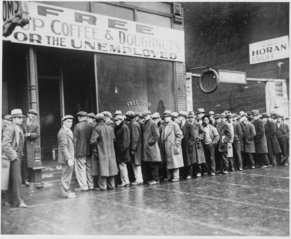
Macroeconomics looks at economies as a whole. Microeconomics looks at the economic behavior of individuals and other economic agents.
Definitions
Macroeconomics
Microeconomics
The study of economics with a holistic view of economic systems such that the behavior of individuals is only measured in aggregate.
The study of economics with a behavioral view that models individual economic decisions and how they impact economic systems.
Scope
Economics is the study of the production, distribution and consumption including topics such as markets, capital, wealth, productivity, efficiency and economic bads. In theory, macroeconomics and microeconomics have the same scope in that you can use either to examine any problem in economics.
Examples
Macroeconomics is useful for modeling top-down policies such as fiscal and monetary policy. Microeconomics looks at the bottom-up details of economic systems, incentives, competition and behavior. The following are examples of topics in each practice.
Macroeconomics
Microeconomics
Aggregate SupplyAggregate DemandInflationUnemploymentMonetary PolicyFiscal PolicyGrowth ModelsEconomic Systems
John Spacey. "Macroeconomics vs Microeconomics ." Simplicable. Retrieved November 17, 2026. from https://simplicable.com/economics/macroeconomics-vs-microeconomics
Cookies help us deliver our services. You have choices regarding these cookies. Please visit our privacy policy, cookie policy and consent tool to learn more.
Copyright 2002-2026 Simplicable. All rights reserved. This material may not be published, broadcast, rewritten, redistributed or translated. Report violations here.