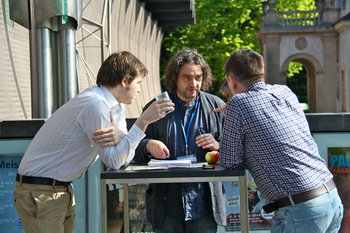
Passive candidates are people who aren't currently in the job market. They are of interest to recruiters and employers who require rare skills and exceptional abilities. As such, it is common to actively seek out passive candidates. The following are common types of passive candidate.
Employed
At any given moment, most employed individuals aren't actively seeking a new position. Employers view such candidates positively as they are often satisfied and engaged in their current job. There is also the perception top talent are less likely to enter the job market as their current employers try to keep them happy. This is particular true of in-demand skills and employees with unusually high performance.
Self Employed
Entrepreneurs and other small business owners aren't typically in the job market. In some cases, companies will try to recruit them nonetheless as they may be leaders in their field who have large networks of contacts. It may be possible to hire an entrepreneur who is close to exiting a current start up. Large firms may buy startups simply to recruit the firm's key employees.
Unpaid Work
Homemakers, volunteers and other people who have been productive with unpaid positions. In some cases, firms offer internships and other programs designed for people who have been out of the workplace for an extended period of time and would like to return. This may attract highly capable individuals who would otherwise assume they are no longer qualified for a position due to a gap on their resume.
Retired
Retired individuals who might be convinced to come back to work.
Students
Students in a high demand area may be engaged by employers early with techniques such as internships and sponsorship of research.
Cookies help us deliver our services. You have choices regarding these cookies. Please visit our privacy policy, cookie policy and consent tool to learn more.
Copyright 2002-2026 Simplicable. All rights reserved. This material may not be published, broadcast, rewritten, redistributed or translated. Report violations here.